To Discuss Material Innovations for Sustainable Construction, UNHAS Graduate School Hosts Experts from INTI University Malaysia
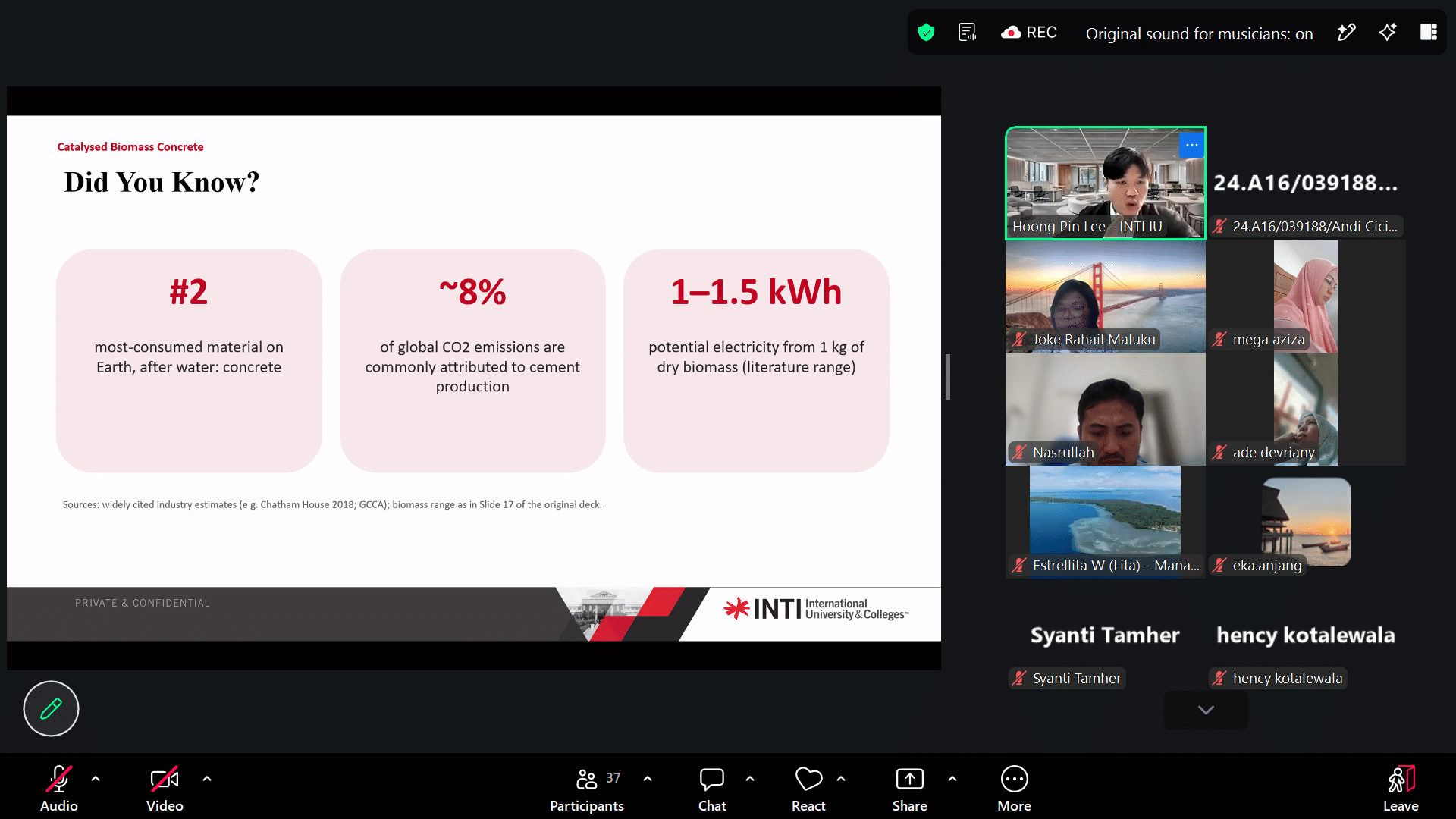
MAKASSAR — The Graduate School of Hasanuddin University (SPs UNHAS) once again expanded its international knowledge exchange space through an International Guest Lecture themed “Catalyzed Biomass Concrete: A Game-Changer for Sustainable Construction through Renewable Energy Resources” on Monday (Oct. 5). The event, held online via Zoom, featured Assoc. Prof. Ts. Dr. Lee Hoong Pin from INTI International University, Malaysia.
This international guest lecture served as a platform for the academic community of SPs UNHAS to gain perspectives and research updates from international academics, particularly regarding construction material innovations that integrate the use of biomass and renewable energy sources.
The event began with a Welcome Speech by the Dean of the UNHAS Graduate School, Prof. Sukri Palutturi, SKM., M.Kes., MSc.PH., Ph.D., and was guided by Rufiqa Shari Abidin, S.Si., M.Biotech (Hons), M.Kes., Ph.D., as the moderator.
Prof. Sukri expressed his appreciation for SPs UNHAS's active role in organizing International Guest Lectures and bringing in experts from various countries. In addition, he emphasized the relevance of energy issues for Indonesia as well as globally. Through this academic exchange with an expert from Malaysia, Prof. Sukri encouraged expanding collaborations involving visiting professors.
During his presentation, Assoc. Prof. Ts. Dr. Lee Hoong Pin highlighted the development of Catalyzed Biomass Concrete (CBC) as an innovation in sustainable construction material development. This concept combines the utilization of biomass with concrete material technology and renewable energy sources to explore new functions for construction materials.
The development of materials like CBC becomes highly relevant amidst the need to create a more sustainable construction sector. Besides functioning as a building material, this innovation opens opportunities for utilizing biomass resources as part of a more efficient and environmentally friendly approach.
The topics discussed also demonstrated the interconnectedness of material innovation, renewable energy, and sustainable development principles. The utilization of biomass as a resource in developing construction materials can be part of the effort to increase resource utility value while driving innovations that support the transition toward more sustainable construction.
Through this forum, SPs UNHAS continues to foster an academic environment that is open to the development of global science and innovation. The exchange of ideas through international guest lectures is expected to enrich the academic community's insights while opening up opportunities for networking and research collaborations in the future.