SPs UNHAS Welcomes Utrecht University Academic to Discuss Environmental Governance in Indonesia
© SPs UNHAS Media 2026
© SPs UNHAS Media 2026
© SPs UNHAS Media 2026
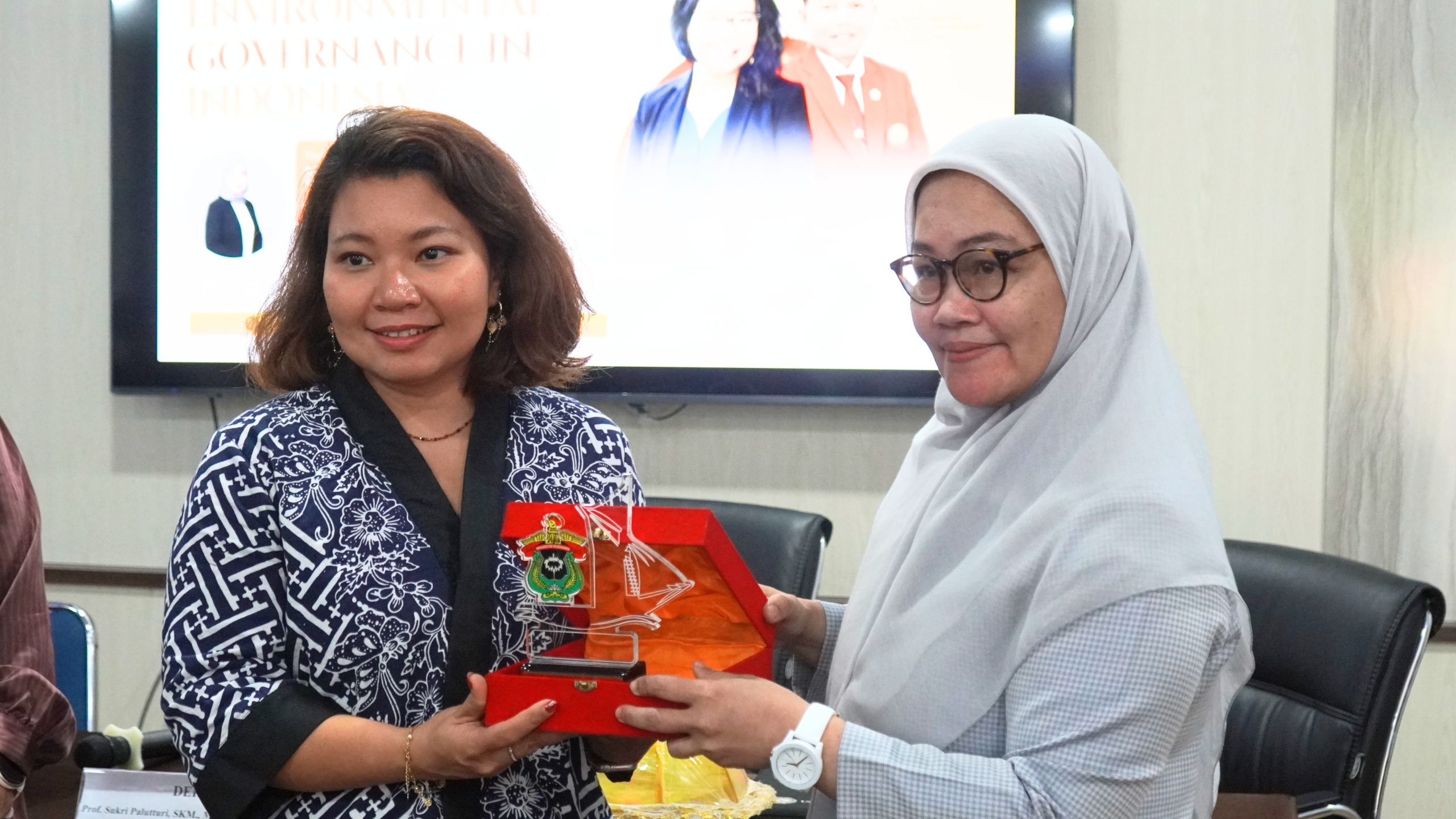
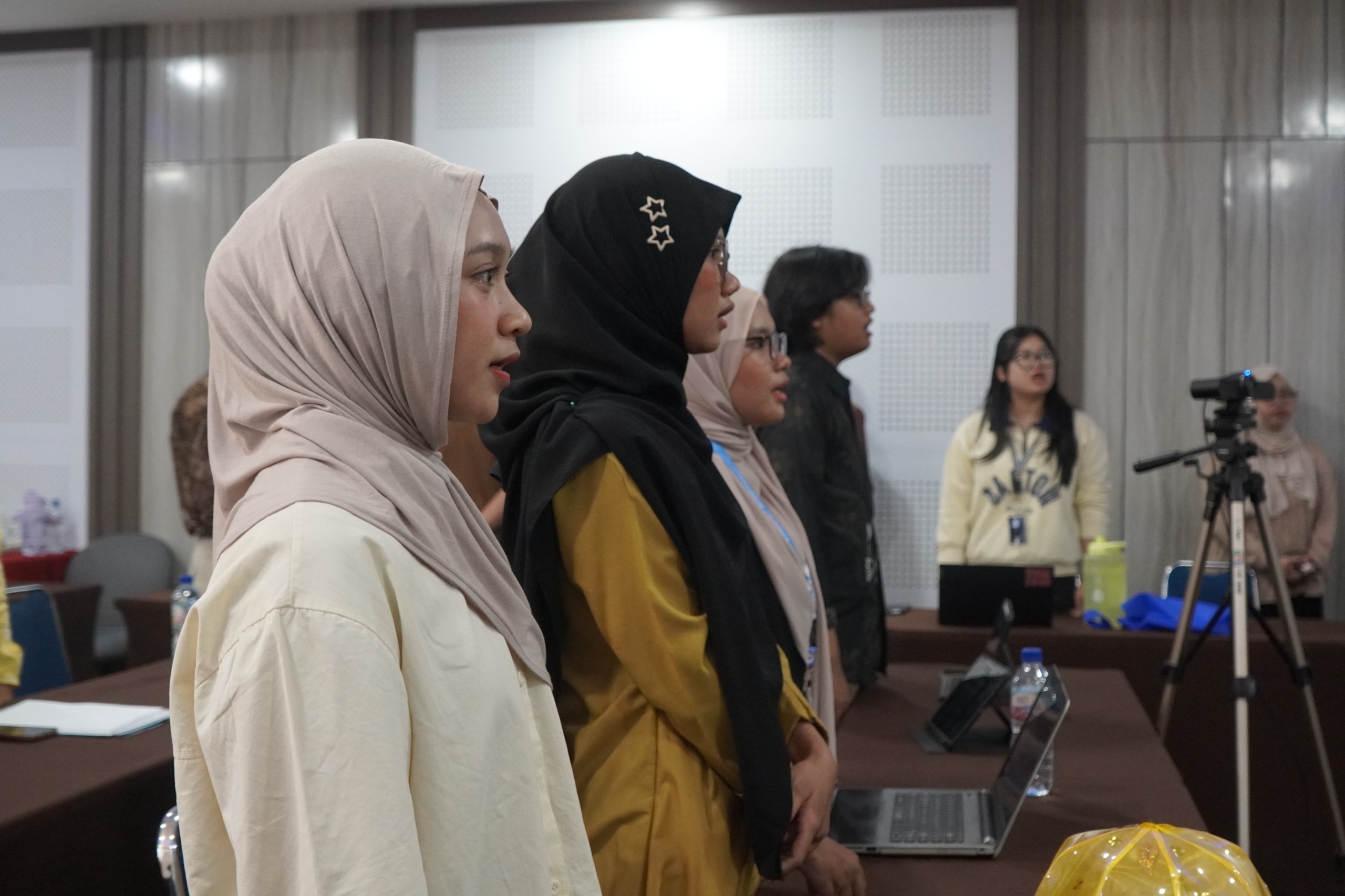
MAKASSAR, October 22 — How can environmental policies address the ecological crisis without overlooking local communities and their knowledge? This question was among the key issues discussed at a guest lecture hosted by the Graduate School of Hasanuddin University (SPs UNHAS) on Thursday, October 22, 2026.
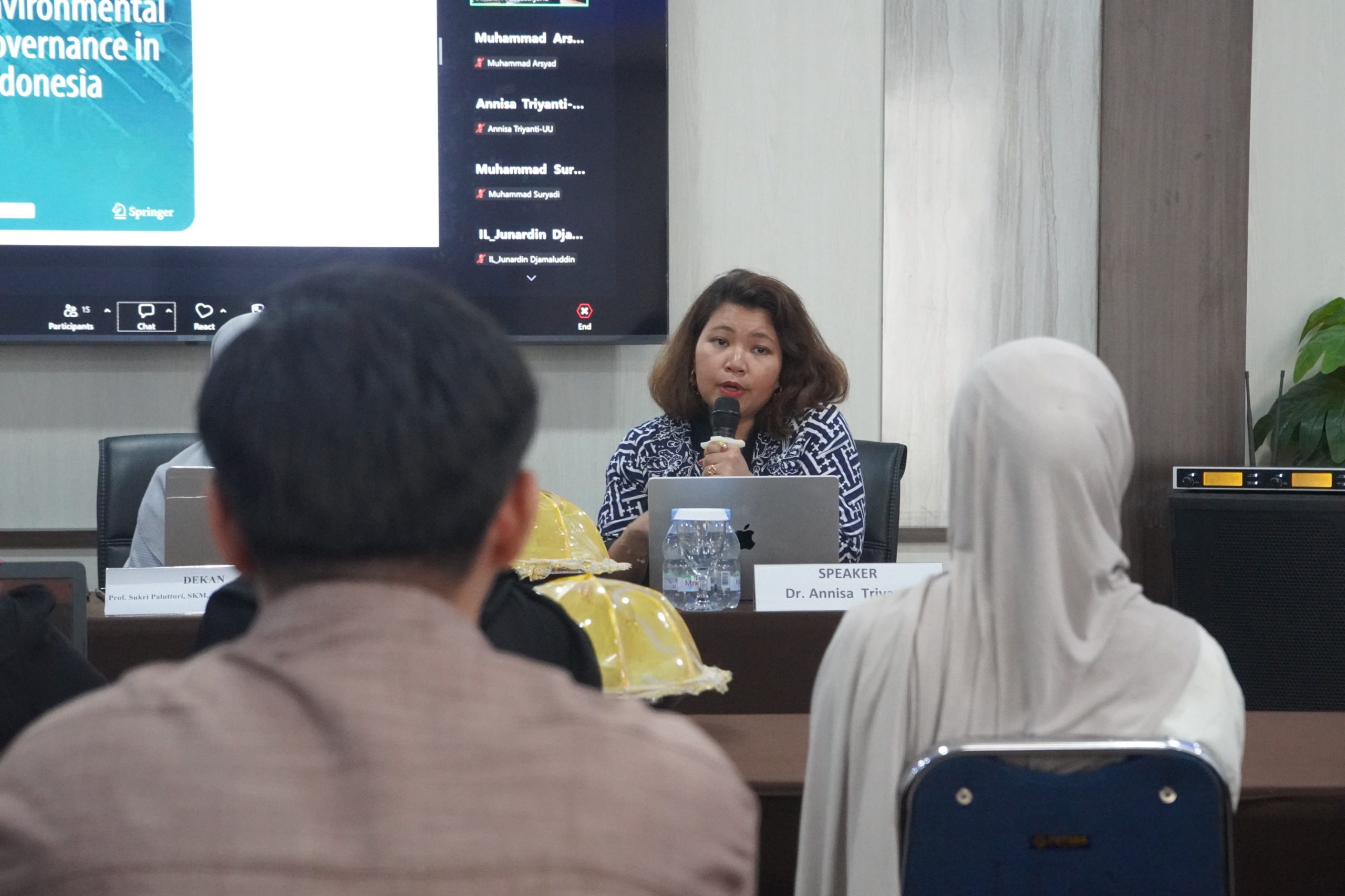
Titled Environmental Governance in Indonesia, the lecture took place at the Smart Class, SPs UNHAS, and featured Dr. Annisa Triyanti, Assistant Professor of Disaster and Climate Risk Governance for Sustainability at the Copernicus Institute of Sustainable Development, Utrecht University, the Netherlands.
In her opening remarks, Prof. Dr. Tuti Bahfiarti, S.Sos., M.Si., Head of the Quality Assurance and Reputation Enhancement Unit at SPs UNHAS, welcomed the event as an opportunity to enrich academic discussions among researchers and students.
“On behalf of the Graduate School of Hasanuddin University, we warmly welcome this guest lecture on environmental governance in Indonesia. This event offers an opportunity to enrich the academic experience of our researchers and students. We hope this forum will encourage deeper discussions among academics about the current dynamics of environmental policy and governance in Indonesia,” she said.
During the lecture, Dr. Annisa highlighted the political dimensions of environmental governance. Environmental issues are not only about managing natural resources, but also about who has the authority to make decisions, how power is exercised, and whether policies are guided by scientific evidence or the interests of particular groups.
These questions are increasingly important as the world faces mounting environmental risks, from extreme weather events to climate change and biodiversity loss. Drawing on the concept of the Anthropocene, Dr. Annisa explained how human activities have become a major driver of changes in the Earth's systems. The concept of Planetary Boundaries, meanwhile, illustrates the growing pressure on the natural systems that sustain life on Earth.
Despite these challenges, she emphasized that there is still room for change. Effective governance, she argued, can help bring people together and support policies that protect the planet.
“If human activities are the main drivers of change and degradation in the Earth's systems during the Anthropocene, then humans also have the capacity to address these problems. This is where governance gives us hope: collective action and sound policies can help safeguard the planet's sustainability,” she explained.
The discussion also explored the challenges of environmental governance at different levels. At the regional level, hydropower development along the Mekong River illustrates the trade-offs between energy production and the potential impacts on biodiversity and local livelihoods. In Indonesia, issues such as forest and land fires, the palm oil and mining industries, and land grabbing highlight the complex relationship between economic development, environmental protection, and the rights of local communities.
Dr. Annisa also raised concerns about the adoption of models and technologies developed in the Global North without sufficient consideration of local social, cultural, and physical conditions. Approaches that overlook these differences, she noted, risk repeating existing problems rather than delivering lasting environmental solutions.
Against this backdrop, local knowledge, including that held by Indigenous communities, remains an important part of environmental governance. Community engagement, sustainable agroforestry, collective awareness campaigns, and environmentally friendly economic incentives were among the approaches discussed to address challenges such as forest and land fires.
The guest lecture was moderated by Nur Isdah Idris, S.IP., M.A., Ph.D. It provided a forum for connecting international academic perspectives with environmental challenges in Indonesia, while highlighting the importance of science-informed policies that take local communities and their needs into account.
Through this event, SPs UNHAS continues to provide a platform for academic exchange that connects environmental issues in Indonesia with wider global discussions. The lecture highlighted the need for governance approaches that go beyond policy and development priorities to also consider ecosystem sustainability and the role of communities in protecting the environment.