UNHAS Graduate School Student Research on an IoT-Integrated Organ-on-a-Chip Prototype Tested by the Head of Indonesia’s BPOM
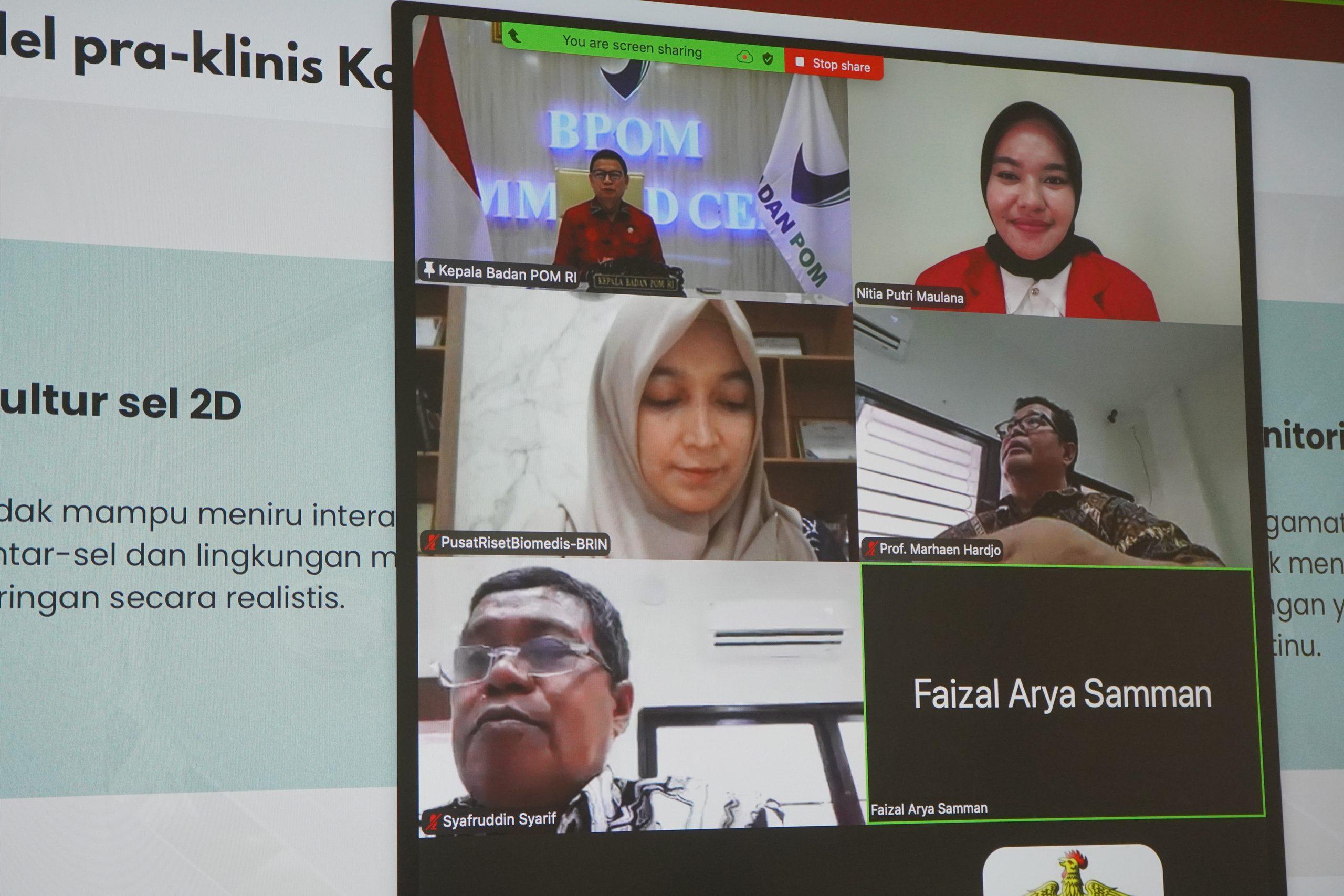
MAKASSAR — The development of organ-on-a-chip technology as a preclinical model to evaluate the effects and responses of radiotherapy on human tissue is the focus of research by Nitia Putri Maulana, a student of the Biomedical Engineering Master's Program at the Graduate School of Hasanuddin University (SPs UNHAS). This research was presented during her thesis final examination held in Room 105 of SPs UNHAS on Wednesday (Oct. 14, 2026), featuring the Head of the Indonesian Food and Drug Authority (BPOM), Prof. dr. Taruna Ikrar, M.Biomed., Ph.D., as one of the examination committee members via the Zoom platform.
The thesis titled “The Potential of Organ-on-a-Chip Technology as a Preclinical Model for Evaluating Radiotherapy Effects and Responses on Human Tissue and Its Integration with Telemedicine” examines the development of a biomedical device prototype combined with an Internet of Things (IoT)-based monitoring system. This approach is directed to support real-time measurement and monitoring of parameters as part of the development of preclinical models for radiotherapy research.
In this research, Nitia designed and fabricated an organ-on-a-chip prototype made of polymethyl methacrylate (PMMA) measuring 80 × 40 mm. The device is equipped with serpentine microchannels and a reversible mechanical clamping mechanism designed to maintain device integrity and prevent leakage.
The device development also includes the integration of DS18B20 and TDS sensors with an ESP32-based electronic system and the MQTT–HiveMQ Cloud platform. This integration enables measurement data to be transmitted and visualized in real-time through a dashboard. Based on the presented test results, the transmission system recorded a packet loss of 0% out of 80 data points tested. The research also evaluated temperature response to UV-C exposure for 15 minutes as well as the consistency of temperature and conductivity measurement results.
Despite showing achievements in design aspects and technical performance, this research still requires further development before it can be used to evaluate the biological response of human tissue to radiotherapy. In the research limitations section, Nitia noted the need for validation using live cell cultures, the use of a radiation source more representative of clinical radiotherapy practices, and long-term stability testing of the device and communication system. Validation through multiphysics simulation to examine heat distribution, energy dose, and microfluidic flow is also part of the next development requirements.
Nitia was supervised by Prof. Dr.-Ing. Ir. Faizal Arya Samman, S.T., M.T., IPU, AseanEng, ACPE, Professor in Electronics and Digital Systems, and Dr. dr. Hasta Handayani Idrus, M.Kes., Senior Researcher at the Biomedical Research Center, National Research and Innovation Agency (BRIN).
The examination committee consists of Prof. dr. Taruna Ikrar, M.Biomed., Ph.D.; Prof. Dr. Ir. Syafruddin Syarif, M.T.; and Prof. Dr. dr. Irfan Idris, M.Kes. Also present was the Vice Dean for Partnership, Research, and Innovation of SPs UNHAS, Prof. Dr. dr. Marhaen Hardjo, M.Biomed., Ph.D.
During the research discussion, Prof. Taruna Ikrar highlighted the potential of organ-on-a-chip technology while reminding of the importance of safety aspects in its development. One of the concerns raised was the safety expectations regarding material usage, including the possibility of allergic reactions due to metal usage.
Such input places safety aspects as a crucial part in the development of biomedical technology. In addition to evaluating the functions and technical performance of the device, further research needs to consider the biological compatibility of the materials used and the responses that might arise when the device is developed for more advanced applications.
On this occasion, Prof. Faizal Arya Samman expressed his appreciation for the presence and involvement of Prof. Taruna Ikrar as an examiner. He hopes that the academic interaction established can continue into a broader collaboration space.
"Of course, we hope that our interaction is not only limited to this examination, but that we can work together to solve problems and develop biomedical instruments," expressed Prof. Faizal.
The involvement of examiners from various scientific backgrounds in this thesis examination serves as an academic evaluation space while opening up opportunities for the exchange of perspectives regarding the development of biomedical technology. For SPs UNHAS, this process aligns with efforts to encourage postgraduate research that brings together cross-disciplinary expertise and is oriented toward the development of science and technology.