SPs UNHAS Hosts UKM Academic for Guest Lecture on Social Mapping in Land Transformation
© SPs UNHAS Media 2026
© SPs UNHAS Media 2026
© SPs UNHAS Media 2026
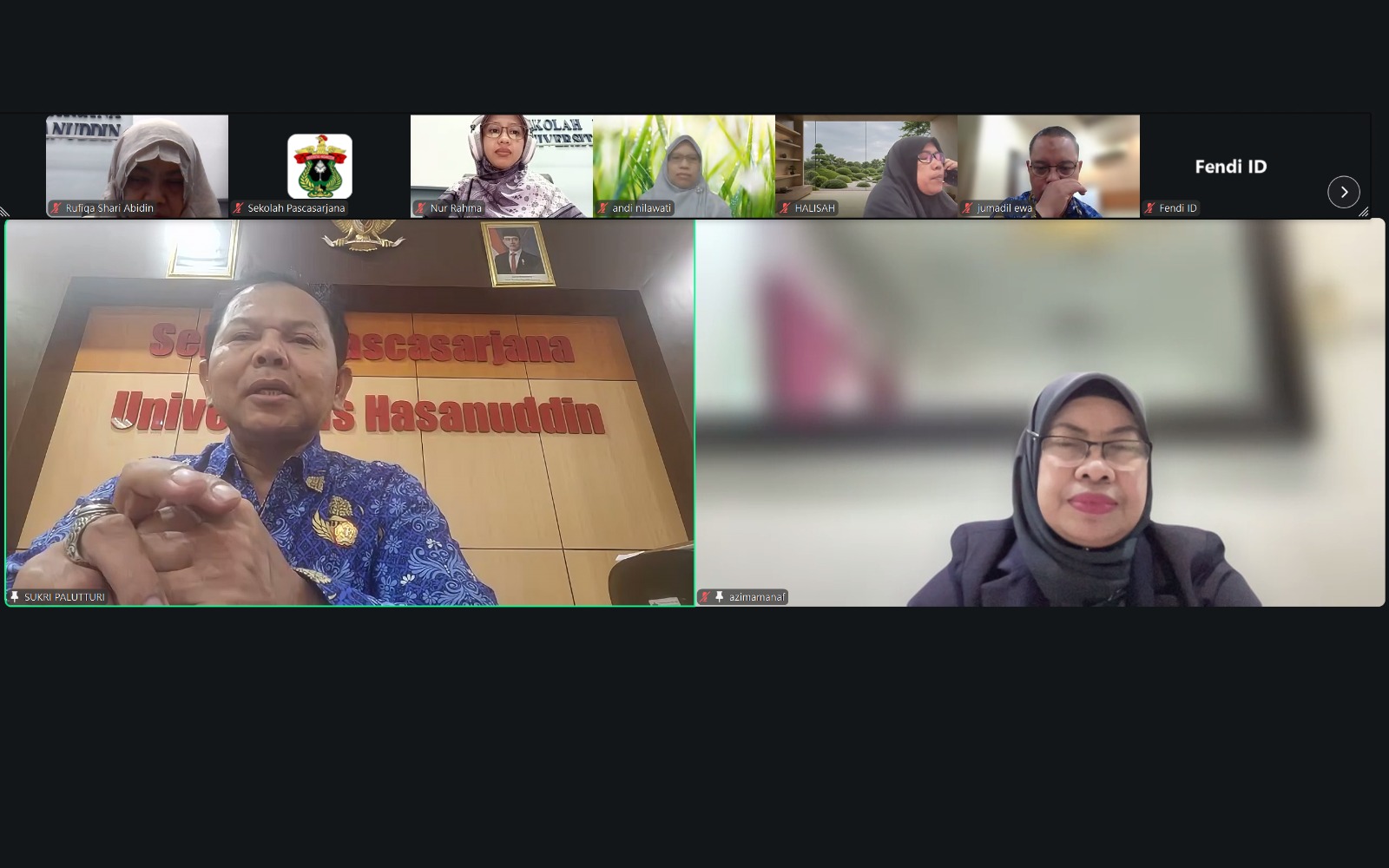
MAKASSAR, October 28 — The Graduate School of Hasanuddin University (SPs UNHAS) hosted Prof. Madya Dr. Azima Binti Abdul Manaf, Senior Lecturer in the Developmental Science Program at Universiti Kebangsaan Malaysia (UKM), for a guest lecture exploring the strategic role of social mapping in anticipating the impacts of market-oriented land transformation. Held online via Zoom on Wednesday, October 28, 2026, the event highlighted the importance of considering local communities’ rights and needs in development processes.
In his opening remarks, Dean of SPs UNHAS, Prof. Sukri Palutturi, S.K.M., M.Kes., MSc.PH., Ph.D., emphasized that land transformation should not be viewed solely from an economic perspective, but must also take into account the social and cultural lives of communities that depend on the land.
“We need to understand that land is not merely a space or an economic commodity, but also the foundation of people’s lives, identities, and cultures. Therefore, every land transformation process must take community voices into account to ensure that development is not driven by economic growth alone, but is also sustainable and equitable for all,” Prof. Sukri stated.
Meanwhile, Prof. Azima explained that land transformation driven by market demands and investment can create economic opportunities, but may also lead to social challenges, including unequal land ownership, loss of local communities’ access to traditional resources, and conflicts arising when competing interests are not adequately addressed.
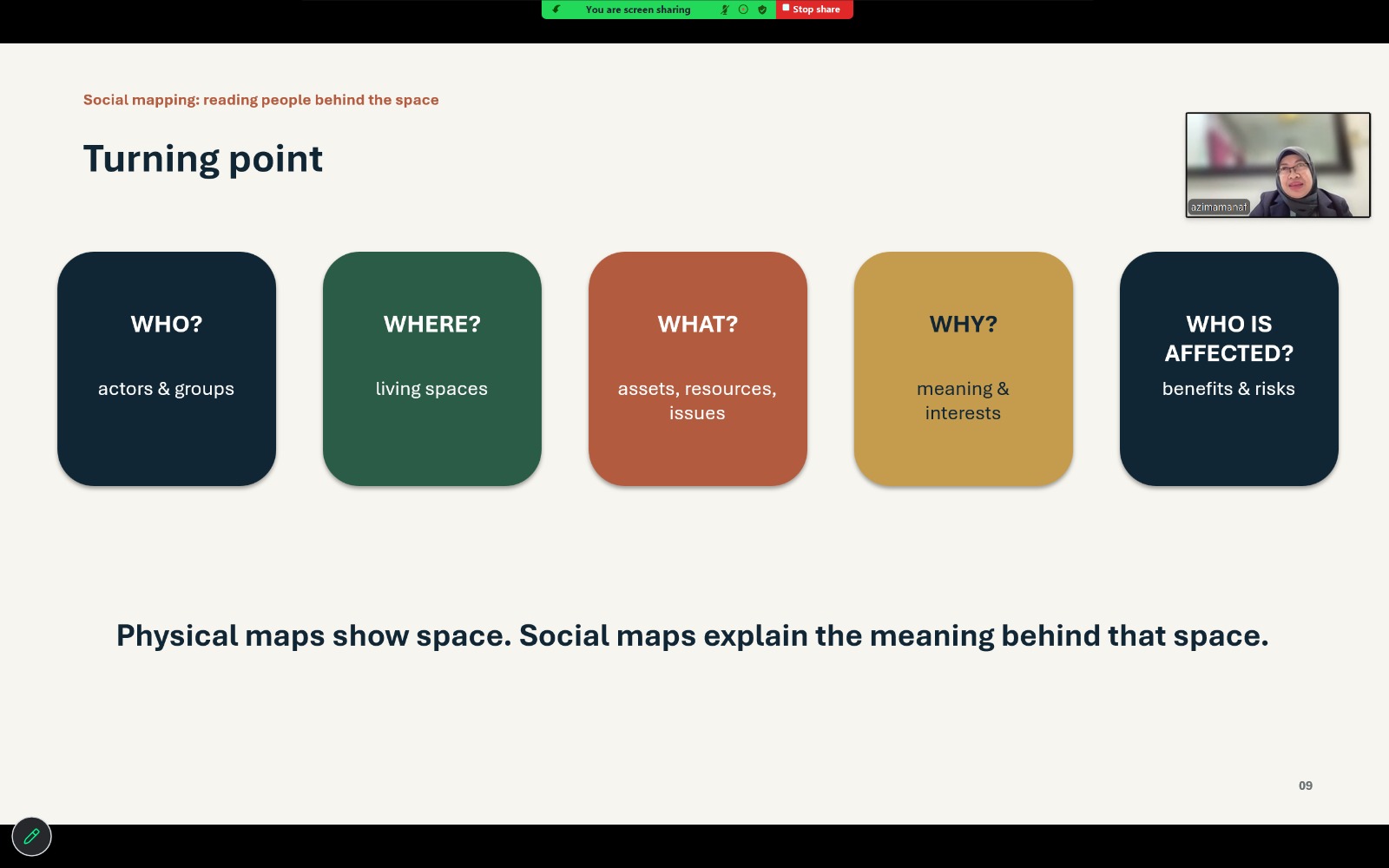
She explained that social mapping serves as a participatory tool for understanding communities’ socioeconomic conditions, assets, needs, and social relationships. The information gathered can inform development planning, mitigate social risks, and support the evaluation of changes in community well-being following land transformation.
“Social mapping is a crucial instrument for balancing market demands with community rights. By mapping community assets, relationships, and needs, we can establish an early warning system to prevent social conflicts and ensure that local communities become subjects, rather than merely objects, of the development process,” Prof. Azima explained.
She also emphasized the importance of involving communities in decision-making to ensure that land-use policies are more inclusive and responsive to local needs. Through continuous monitoring, the impacts of development can be evaluated not only in economic terms, but also in terms of changes in social conditions and household well-being.
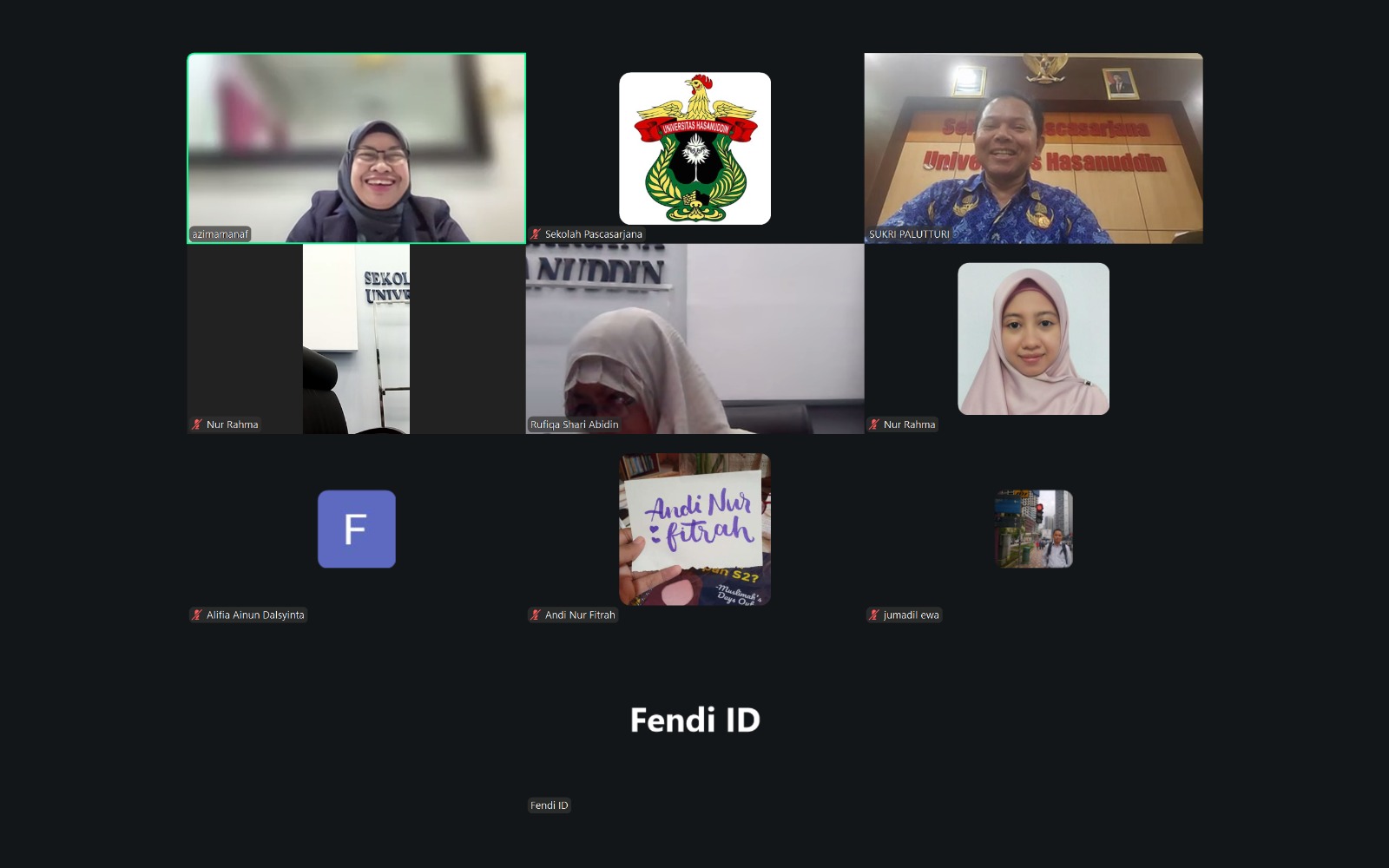
Moderated by Dr. Nur Rahma, S.Si., the guest lecture provided a platform for cross-country academic knowledge exchange on development challenges and the management of the social impacts of land transformation. Through this event, SPs UNHAS reaffirmed the importance of integrating social perspectives into development planning, ensuring that economic interests go hand in hand with the protection of community rights and the principles of sustainability.