SPs Preneurs: Turning Business Ideas into Innovative and Valuable Ventures
© SPs UNHAS Media 2026
© SPs UNHAS Media 2026
© SPs UNHAS Media 2026
© SPs UNHAS Media 2026
© SPs UNHAS Media 2026
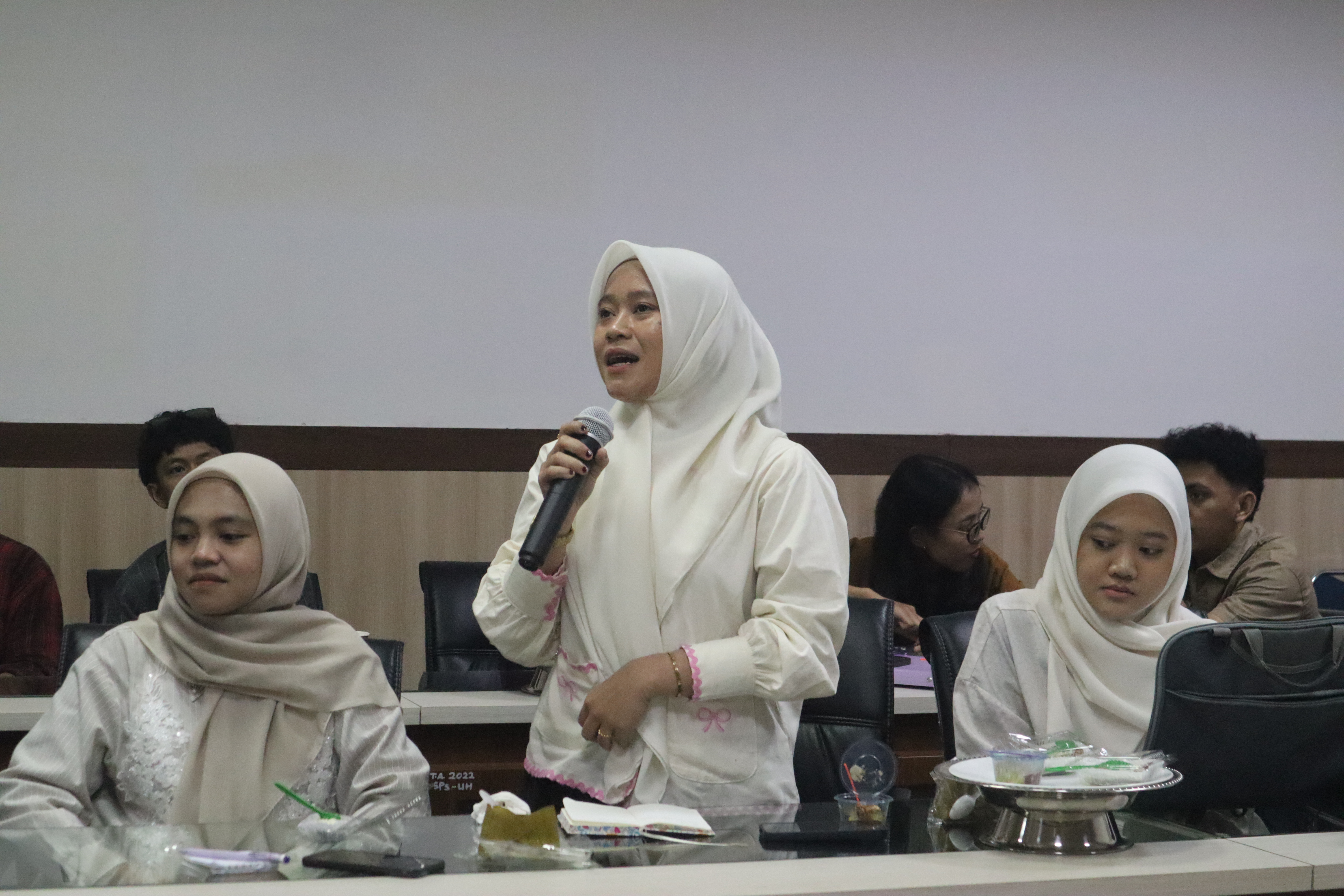
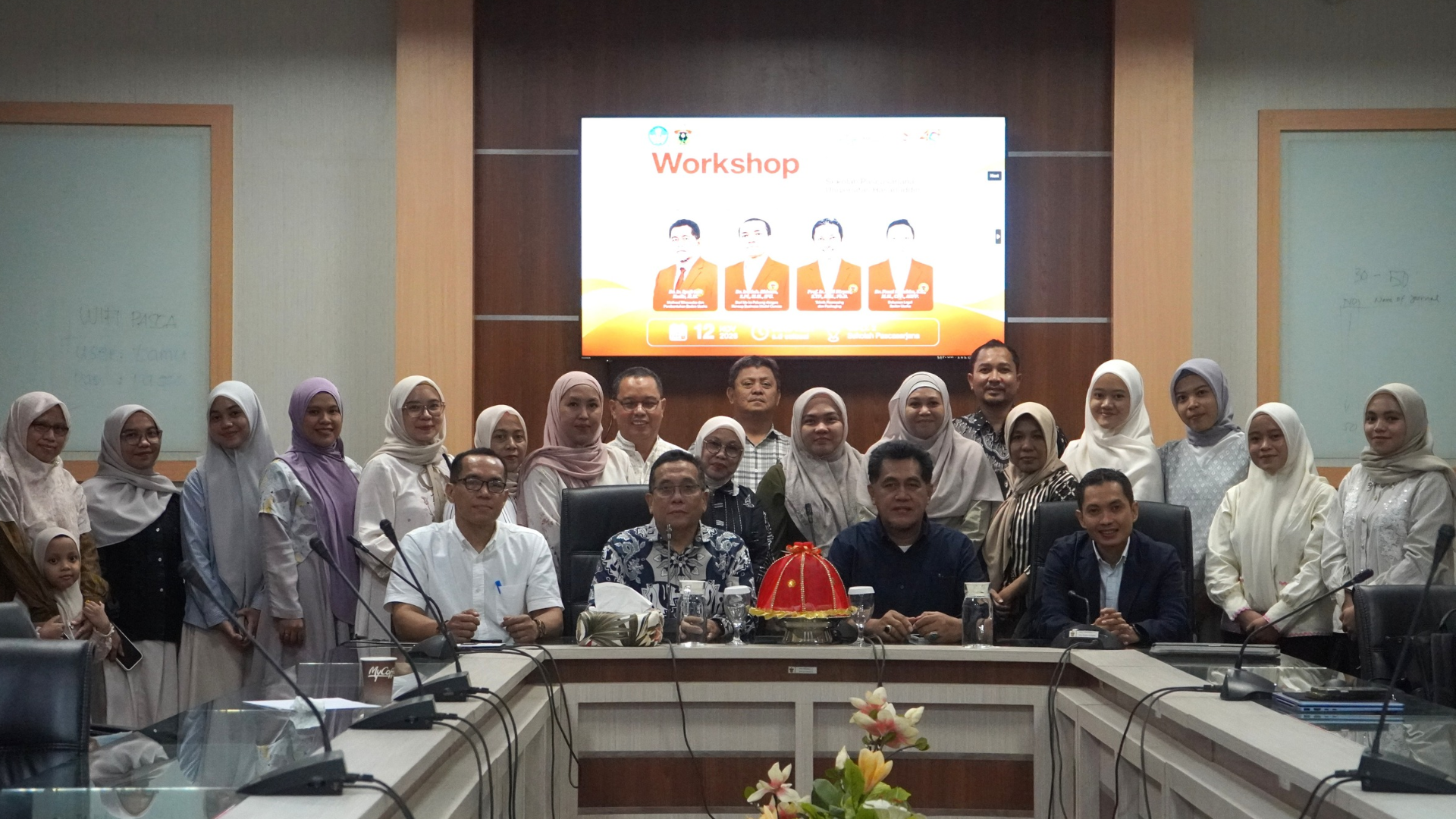
MAKASSAR, November 12 — The Graduate School of Hasanuddin University (SPs UNHAS) is taking strategic steps to strengthen the competitiveness and economic independence of its academic community through an Entrepreneurship Workshop for students and members of the SPs UNHAS community. Held at the GB II Meeting Room of SPs UNHAS on Thursday (12 November 2026), the workshop brought together 95 participants. It was comprehensively designed as a concrete effort to develop globally competitive entrepreneurs who are ready to turn innovative business ideas into reality, backed by legal certainty and market readiness.
This integrated training program underscores SPs UNHAS’s commitment to supporting the Sustainable Development Goals (SDGs), particularly quality education (SDG 4), decent work and economic growth (SDG 8), industry, innovation and infrastructure (SDG 9), and strategic partnerships (SDG 17).
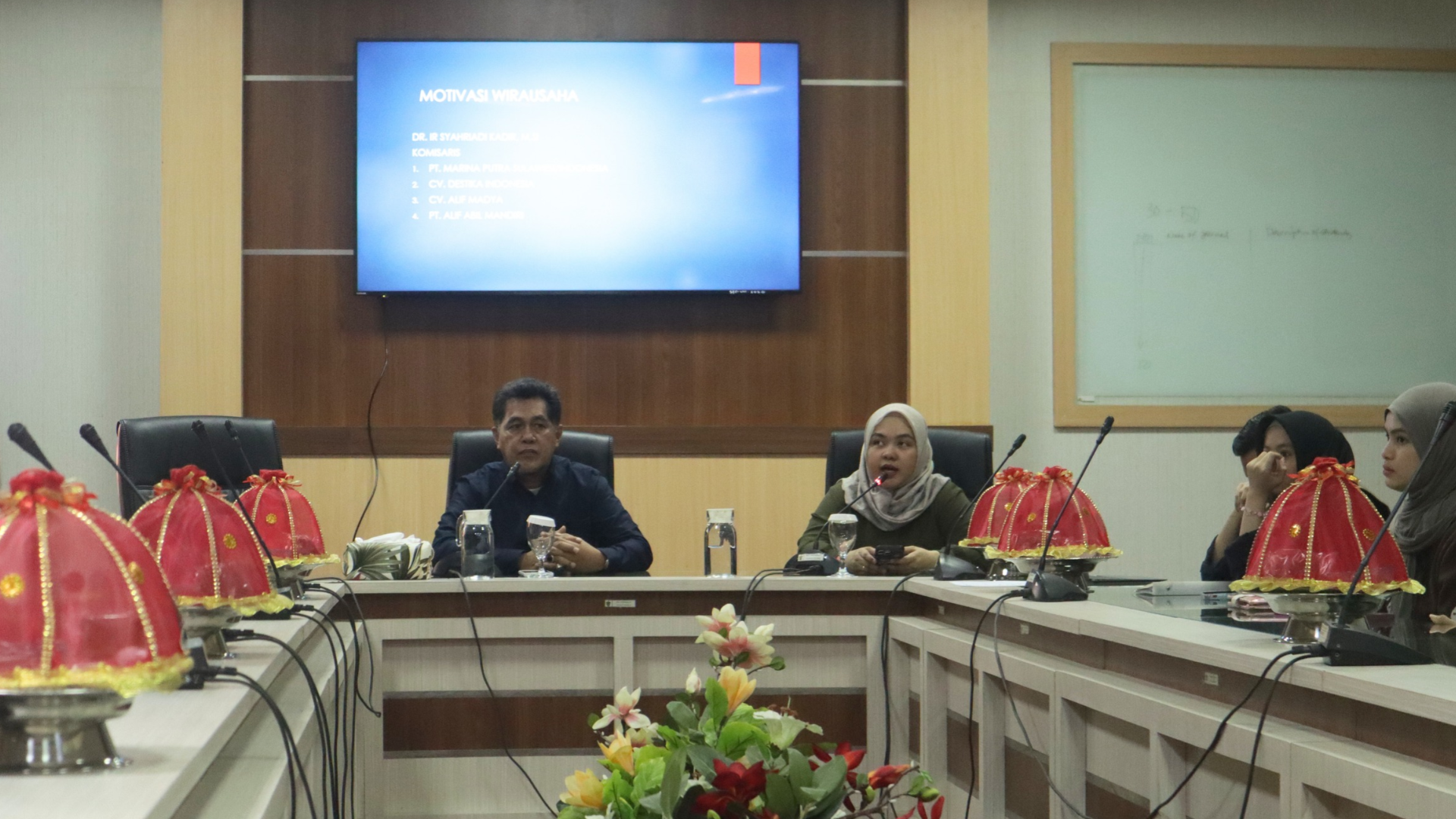
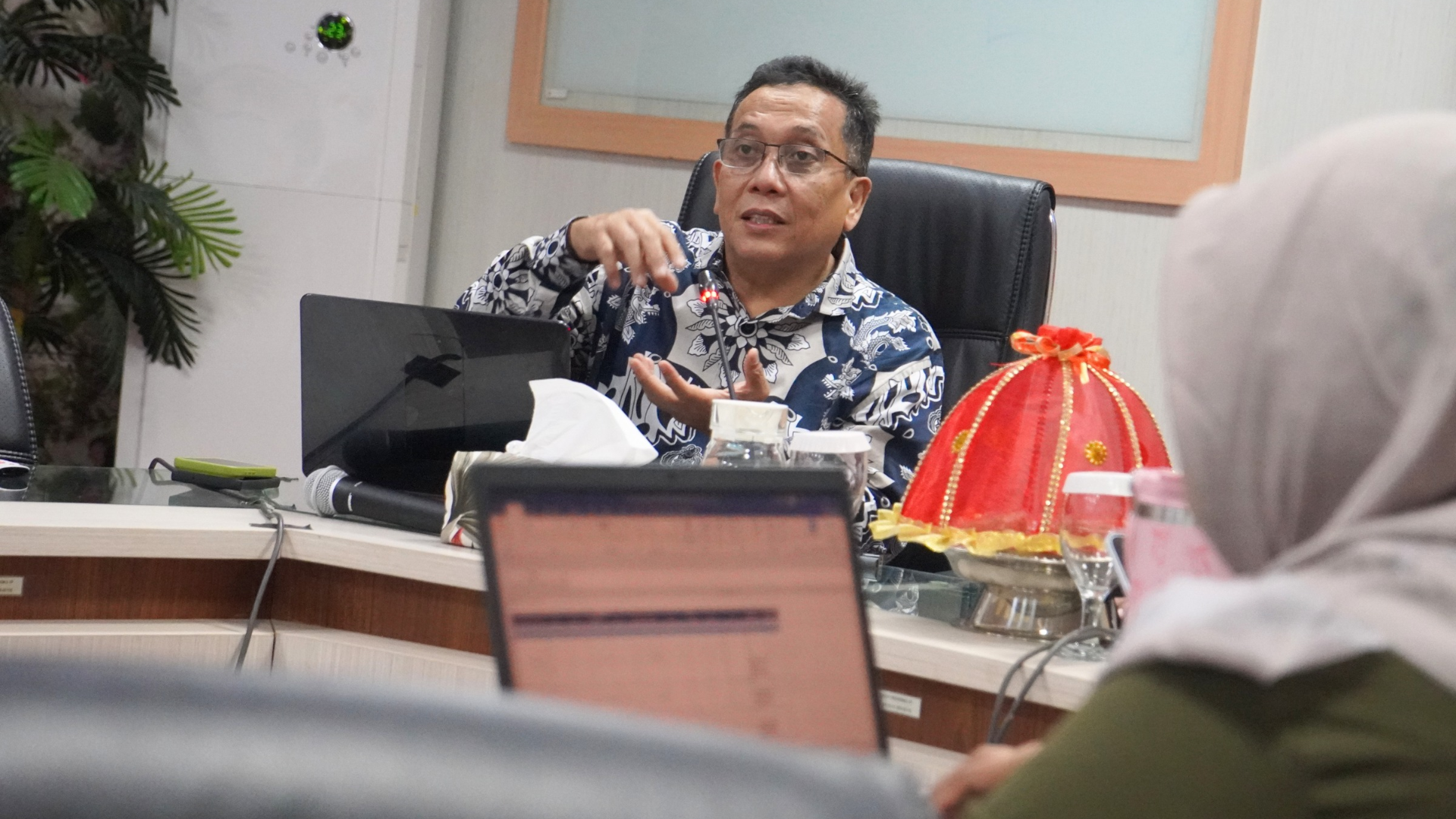
To challenge the perception that business is only for certain groups, the workshop began with a session on entrepreneurial mindset and character development led by Dr. Ir. Syahriadi Kadir, M.Si. He emphasized that 80 percent of entrepreneurial success is determined by character resilience, soft skills, and the breadth of one's network, while technical competence and financial capital each account for only around 10 percent.
“Business is not something inherited; it is something that can be learned. Anyone can do it. The question now is, who dares to take the first step?” said Mr. Syahriadi, Vice Dean for Planning and Resources, as he encouraged participants to build their confidence and take action.
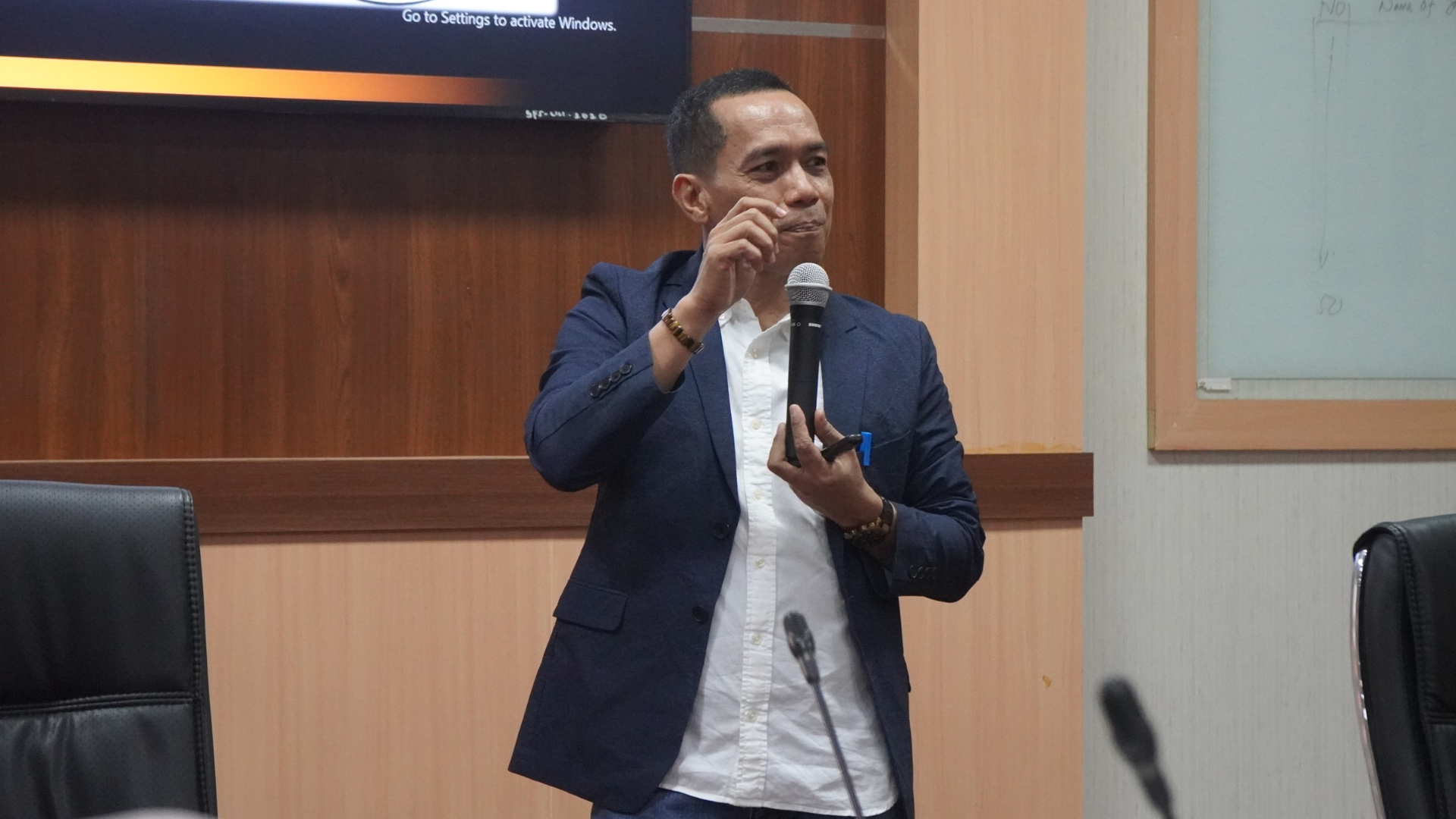
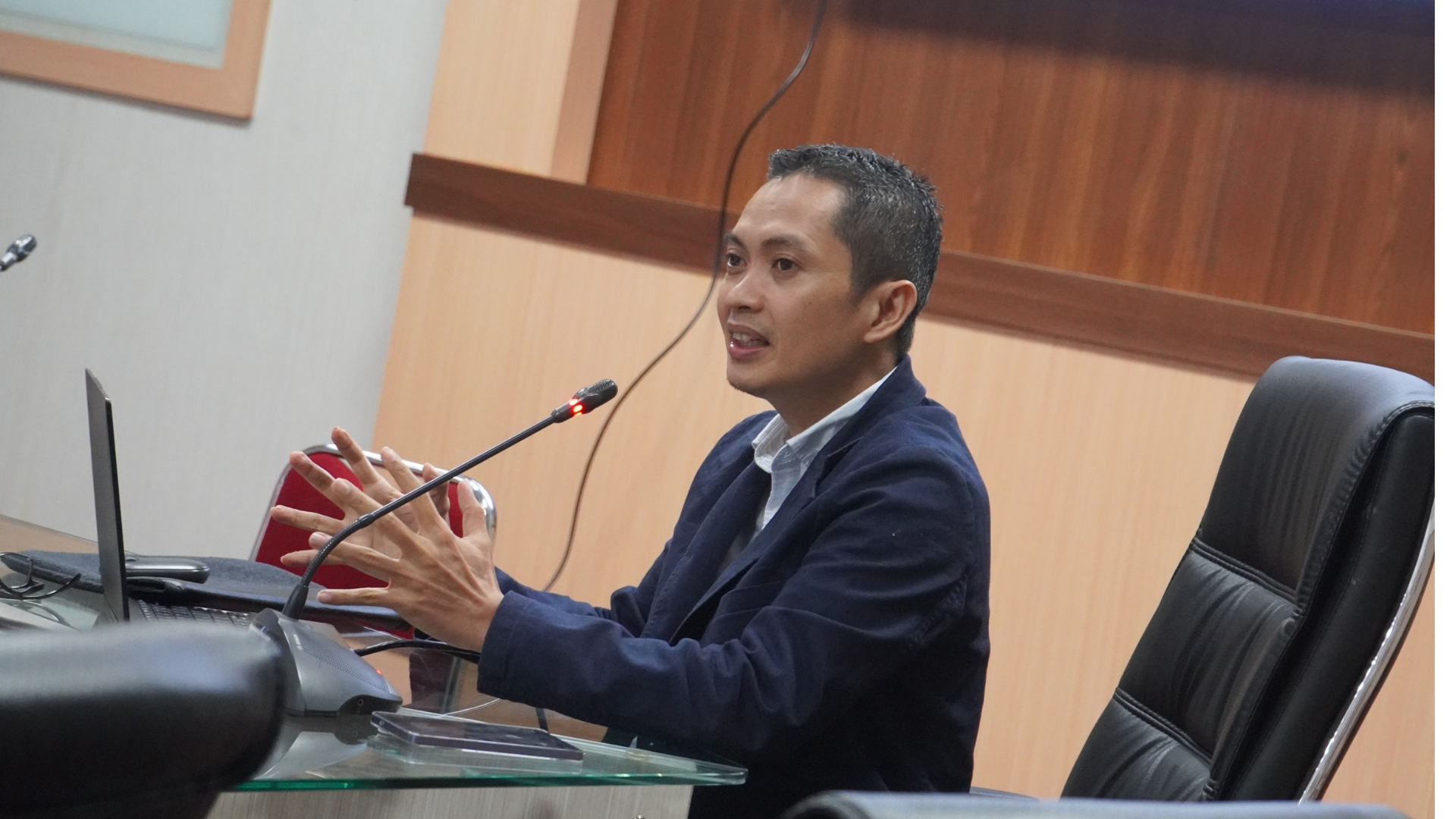
Addressing the challenges of turning ideas into action in the digital era, Dr. Ir. Muh. Ridwan, S.Pt., M.Si., IPU, encouraged participants to think outside the box through the development of a Business Model Canvas (BMC). Drawing on Gojek’s transformation as a case study of how a simple idea grew into a vast business ecosystem, he emphasized that the courage to explore unconventional ideas is key to creating innovations that respond to people's needs.
“The wilder the idea, the better, as long as it is supported by a structured and measurable business model,” Mr. Ridwan explained.
The sustainability of student businesses was further addressed through formal business registration and legal protection, presented by Dr. Fauzi R. Rahim, S.E., M.Si., CFP., AEPP. He stressed that sound business governance must be supported by proper legal status, whether for micro, small, and medium enterprises (MSMEs) operating as a Commanditaire Vennootschap (CV), partnership (Firma), or individual limited liability company, or for larger-scale businesses in accordance with Law No. 40 of 2007. Meeting legal requirements, including the Deed of Establishment, approval from the Ministry of Law and Human Rights, and transparency of beneficial ownership, serves as a key foundation for ensuring investment certainty and business sustainability in the future.
The business downstreaming process was further strengthened by Prof. Ir. Andi Dirpan, S.TP., M.Si., Ph.D., who highlighted food processing technology and the competitiveness of product packaging. According to him, research innovation and superior taste must be complemented by aesthetically appealing packaging to reach broader markets. He emphasized that “the packaging process is very important in helping student businesses grow rapidly.”
Going forward, SPs UNHAS will open an entrepreneurship mentoring program for members of the UNHAS postgraduate academic community whose business ideas are considered promising and submitted through proposals. With this system and support in place, the initiative is expected to foster an entrepreneurial spirit, develop impactful business ideas, and help participants adapt to changes in technology and global markets.