Supporting the SDGs, SPs Unhas Team Empowers Parepare’s KWT Masagenae with Zero Waste Chili Processing
© SPs UNHAS Media 2026
© SPs UNHAS Media 2026
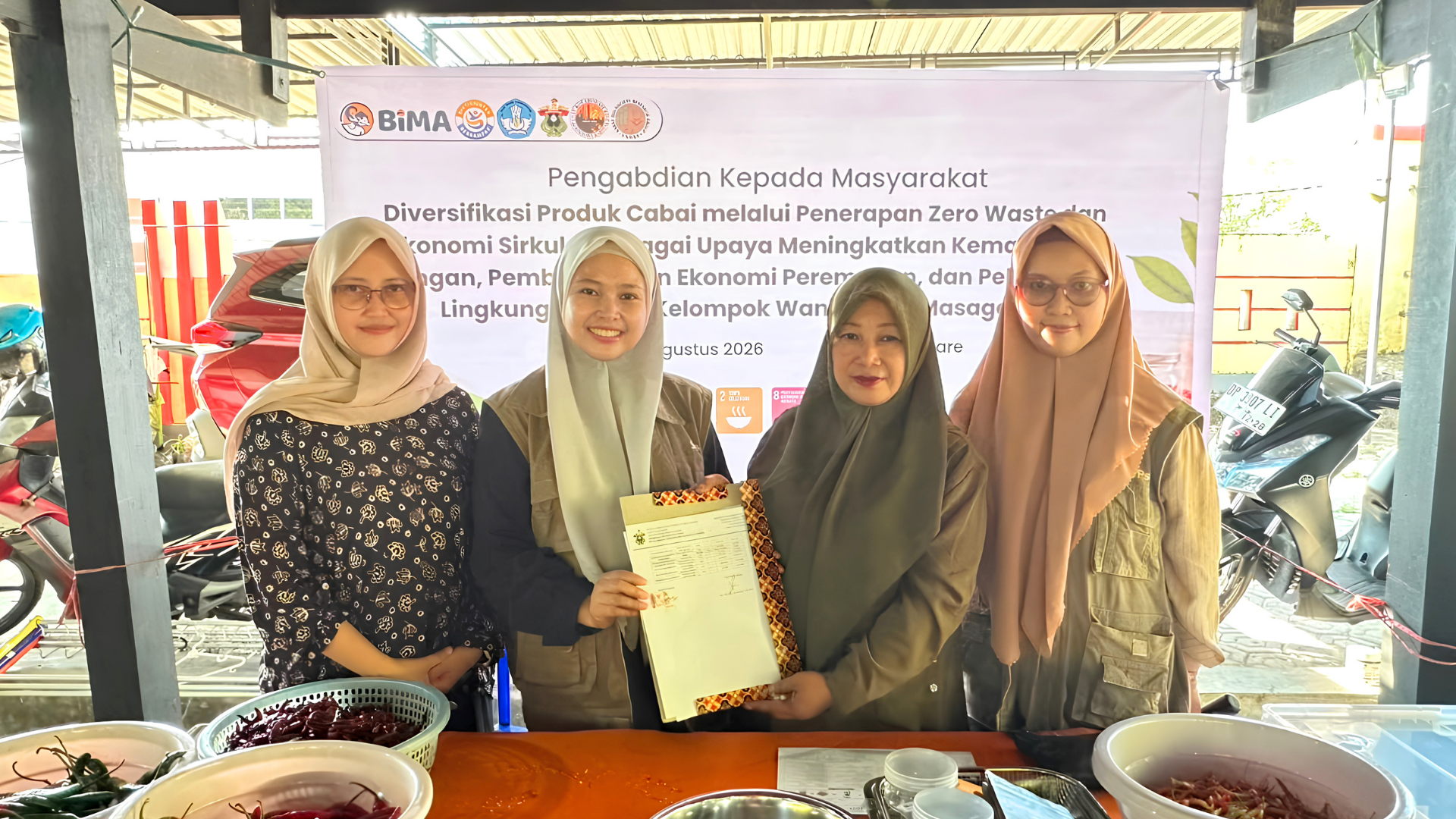
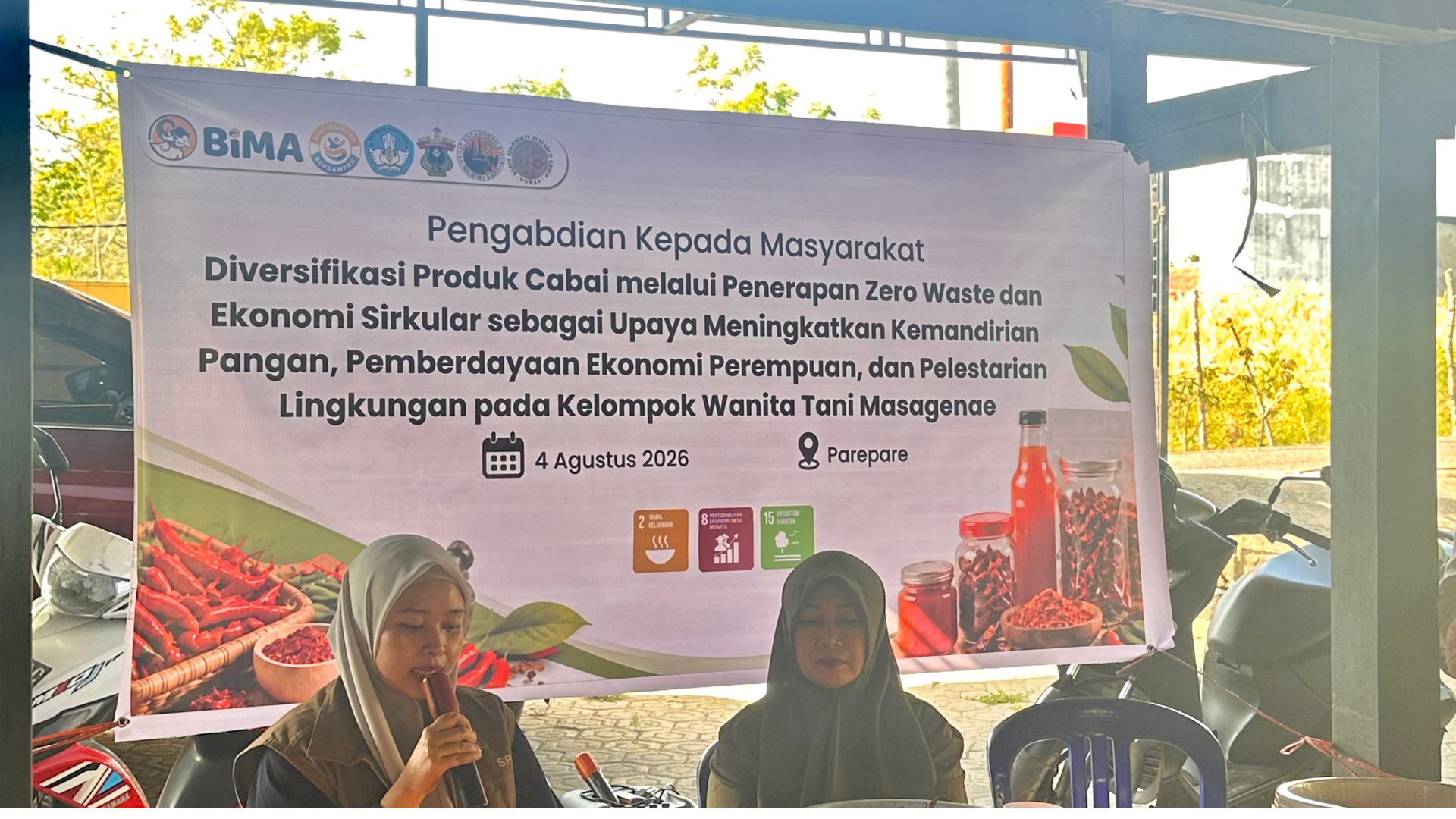
PAREPARE — Price fluctuations and the high risk of post-harvest spoilage remain major challenges for local chili farmers. Addressing these issues while supporting the Sustainable Development Goals (SDGs), specifically SDG 2 (Zero Hunger & Food Security), SDG 8 (Decent Work and Economic Growth), and SDG 15 (Life on Land), a Community Service (PkM) team from Universitas Hasanuddin (Unhas) conducted an empowerment initiative in Lumpue Village, Bacukiki District, Parepare City, South Sulawesi on August 2026.
Supported by the Directorate General of Higher Education, Science, and Technology (Diktisaintek), the initiative carried the theme "Diversification of Chili Products to Enhance Food Self-Sufficiency through the Implementation of Zero Waste Principles and Circular Economy at KWT Masagenae". The Unhas team was led by Dr. Hafizhah Al Amanah, S.Si., M.Si., alongside Prof. Dr. Ir. Siti Halimah Larekeng, SP., MP., Dr. Andi Muliarni Okasa, S.P., and student team members.
The program provided a practical solution by transforming perishable raw chilies into a clean, premium chili powder free from artificial colorings. This processing innovation effectively reduces post-harvest losses (food loss) during peak harvest seasons, thereby strengthening long-term food security and self-sufficiency for the local community.
Through hands-on processing workshops, members of the Women Farmers Group (KWT) Masagenae gained technical skills to create high-value processed commodities. The resulting chili powder commands a much more stable market value compared to fresh chilies, effectively raising household incomes and fostering economic independence in Lumpue Village.
"During harvest season when market prices drop, many chilies end up rotting and going to waste. We lost both labor and costs. Thanks to the chili powder processing training from the Unhas team, we now understand how to preserve chilies while boosting their economic value," said Ms. Rahmadanih, a member of KWT Masagenae.
In line with terrestrial ecosystem protection, the initiative educated residents on applying Zero Waste and circular economy principles. Every part of the chili harvest is utilized to minimize organic waste accumulation. This practice ensures proper waste management to preserve the local terrestrial ecosystem.
Through comprehensive mentorship spanning from raw processing to product marketing, the SPs Unhas team is dedicated to fostering value-added agricultural products, food independence, environmental conservation, and sustainable economic growth for the community of Parepare.