SPs UNHAS Senate Reviews Compost House Development to Support Green Campus Initiatives
© SPs UNHAS Media 2026
© SPs UNHAS Media 2026
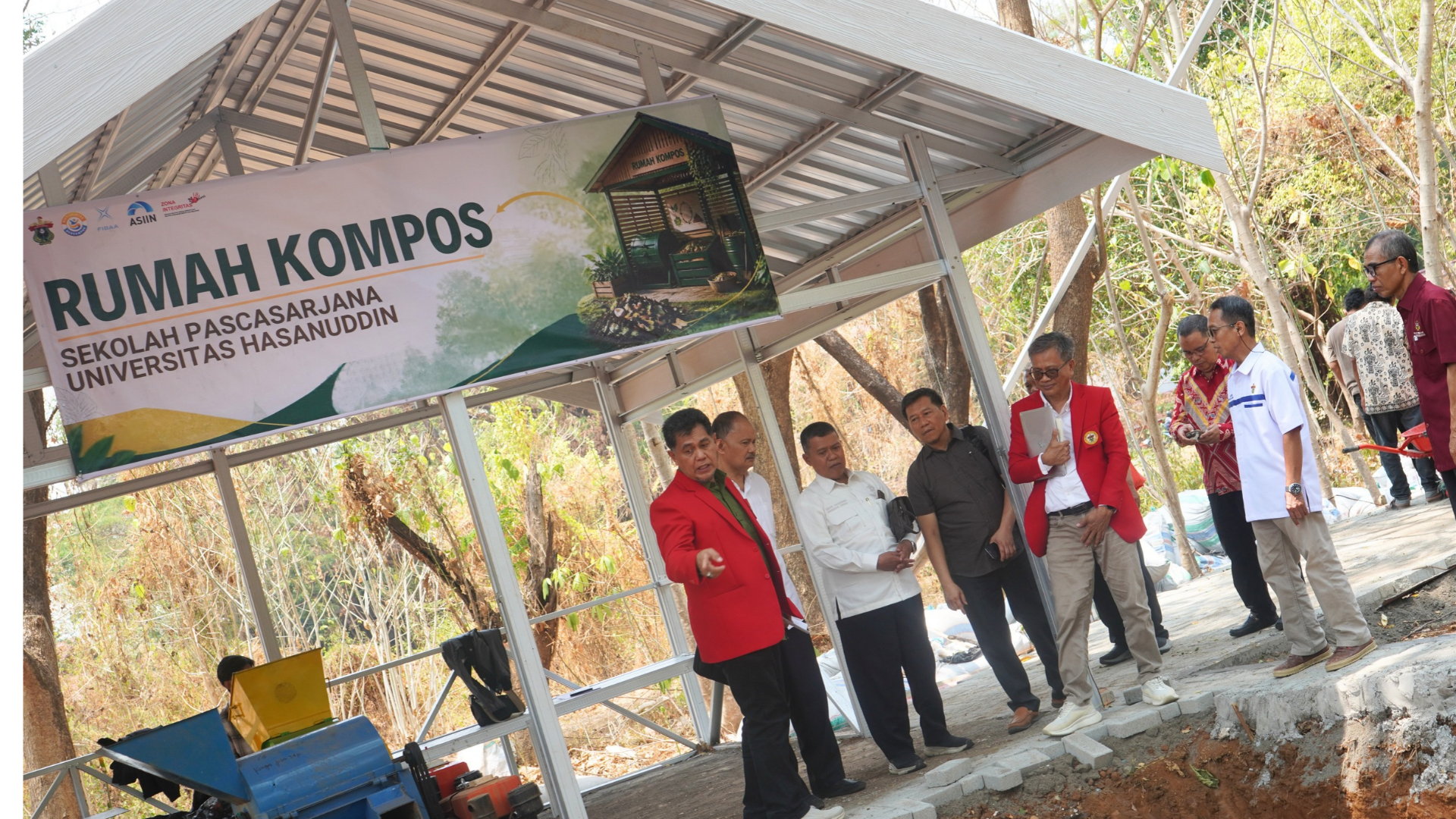
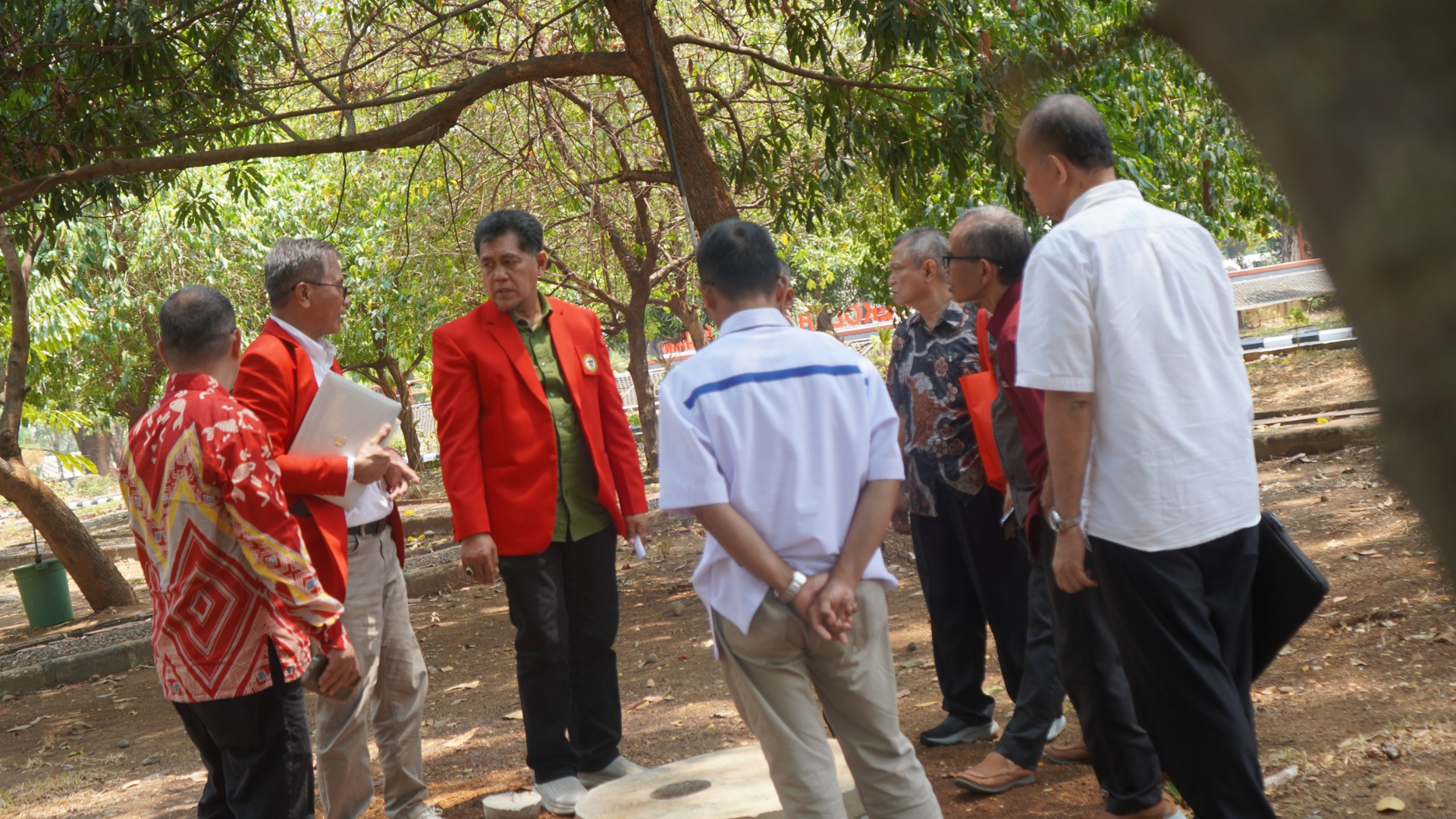
MAKASSAR, 30 October — Following a Senate meeting on Friday, October 30, 2026, Head of the Senate of the Graduate School of Hasanuddin University (SPs UNHAS), Prof. Dr. Ir. Baharuddin, Dipl.Ing. M.Agr., joined several Senate members in reviewing the progress of the SPs UNHAS Compost House development. The group was accompanied by Vice Dean for Planning and Resources, Dr. Ir. Syahriadi Kadir, M.Si., who explained the waste management process and the facility’s development stages.
The Compost House is being developed to process organic waste generated within the SPs UNHAS campus. Fallen leaves collected around the campus are not simply discarded but sorted and processed into compost. To support this activity, SPs UNHAS has also assigned dedicated staff to collect fallen leaves across the campus.
The process begins with sorting organic and inorganic waste, followed by chopping dry leaves and kitchen waste using a machine. The chopped organic materials are then processed with the addition of manure and a bioactivator solution. The compost is expected to be ready for harvesting in approximately 30 days, depending on its maturity and processing conditions.
Seeing the potential of this initiative, Head of the SPs UNHAS Senate, Prof. Baharuddin, noted that the facility could produce high-quality fertilizer if supported by a well-managed system. “It has the potential to produce high-quality fertilizer with a proper system,” he said.
The process does not end with composting. Once mature, the compost is ground and sifted before being mixed with soil and rice husk charcoal. The mixture is then packaged as planting media in 10-kilogram bags. Through this process, organic waste that would otherwise be discarded can be turned into a useful product.
The development of the Compost House is also part of SPs UNHAS’s efforts to promote sustainable campus waste management. The facility supports the waste management aspect of the UI GreenMetric assessment, particularly its focus on organic waste treatment in higher education institutions.
Through this visit, the SPs UNHAS Senate had the opportunity to observe the facility’s development firsthand. The Compost House is expected to support a more organized approach to organic waste management and contribute to creating a greener and more sustainable campus environment.