SPs UNHAS Serves as Co-Host of International Conference, Prof. Sukri Palutturi Presents the Health in All Policies (HiAP)
© SPs UNHAS Media 2026
© SPs UNHAS Media 2026
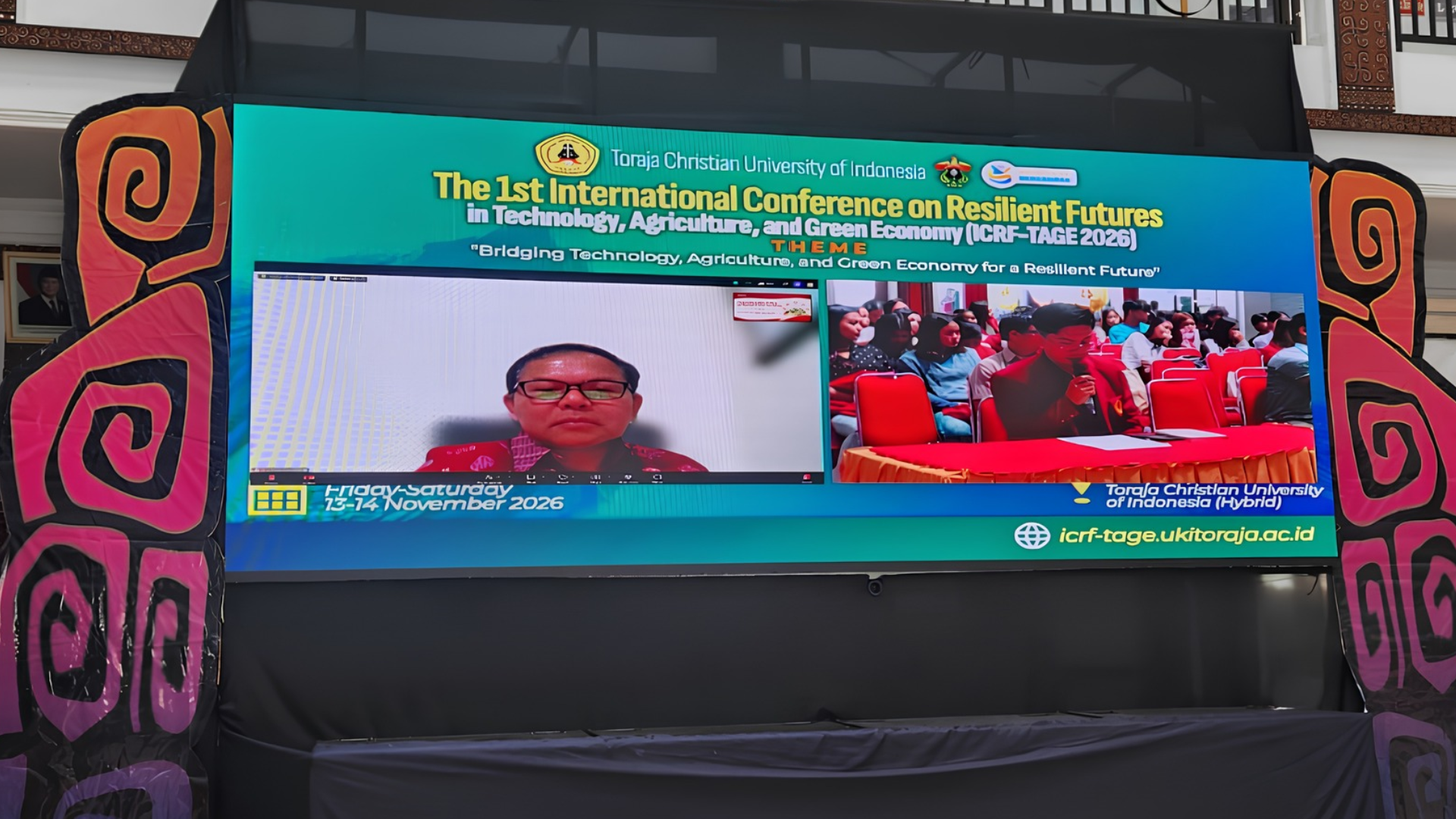
TANA TORAJA, November 13 — The Graduate School of Hasanuddin University (SPs UNHAS) played a strategic role as co-host of The 1st International Conference on Resilient Futures in Technology, Agriculture, and Green Economy (ICRF-TAGE 2026), while also featuring the Dean of SPs UNHAS, Prof. Sukri Palutturi, S.K.M., M.Kes., MSc.PH., Ph.D., as a keynote speaker.
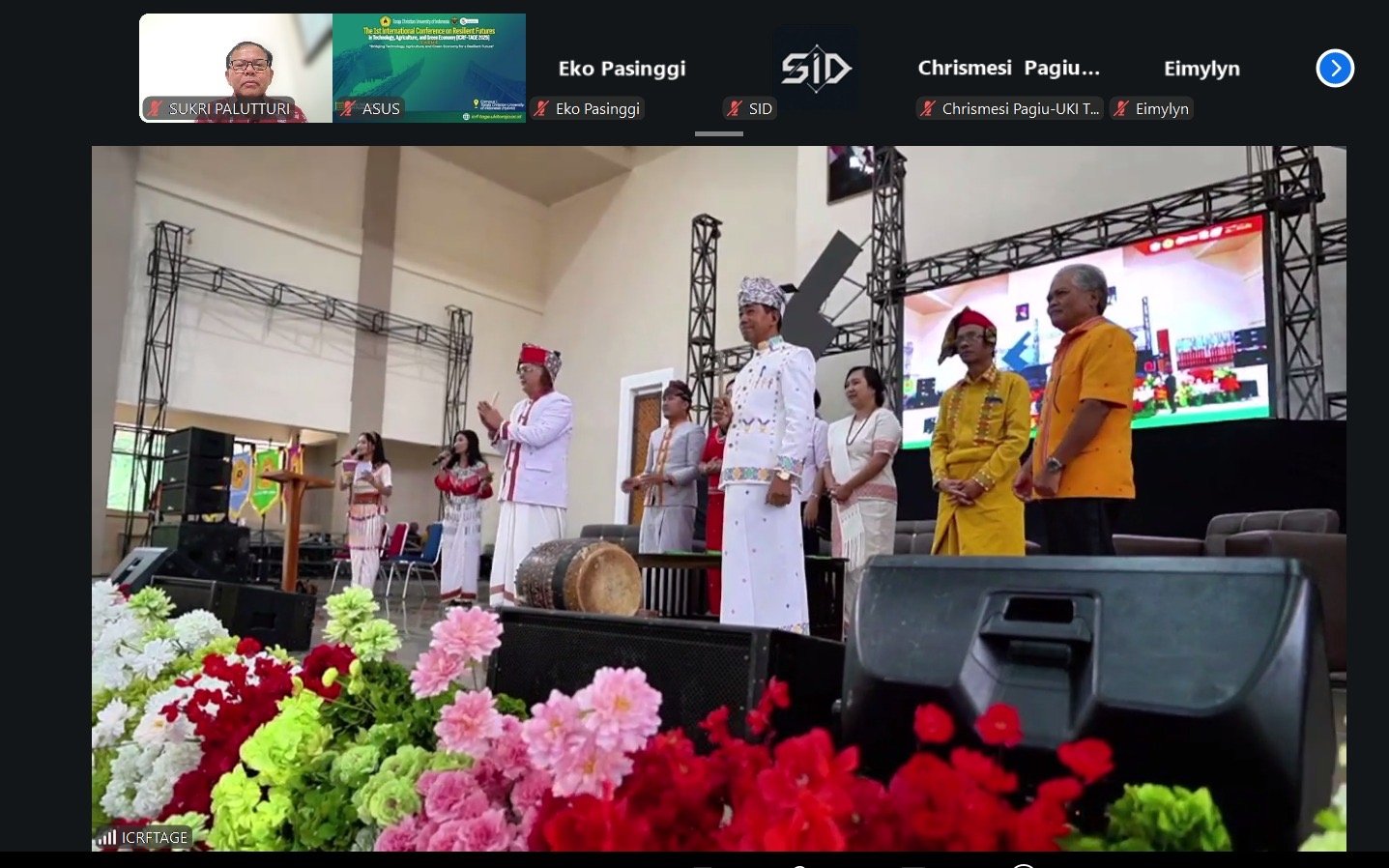
The hybrid conference was organized by Universitas Kristen Indonesia (UKI) Toraja on 13–14 November 2026 at UKI Toraja Campus 1 in Makale, Tana Toraja Regency, South Sulawesi. Carrying the theme “Bridging Technology, Agriculture, and Green Economy for a Resilient Future,” the international event brought together academics and researchers from various countries while strengthening institutional collaboration between Hasanuddin University (UNHAS) and UKI Toraja in the development of education, research, and global academic networks.
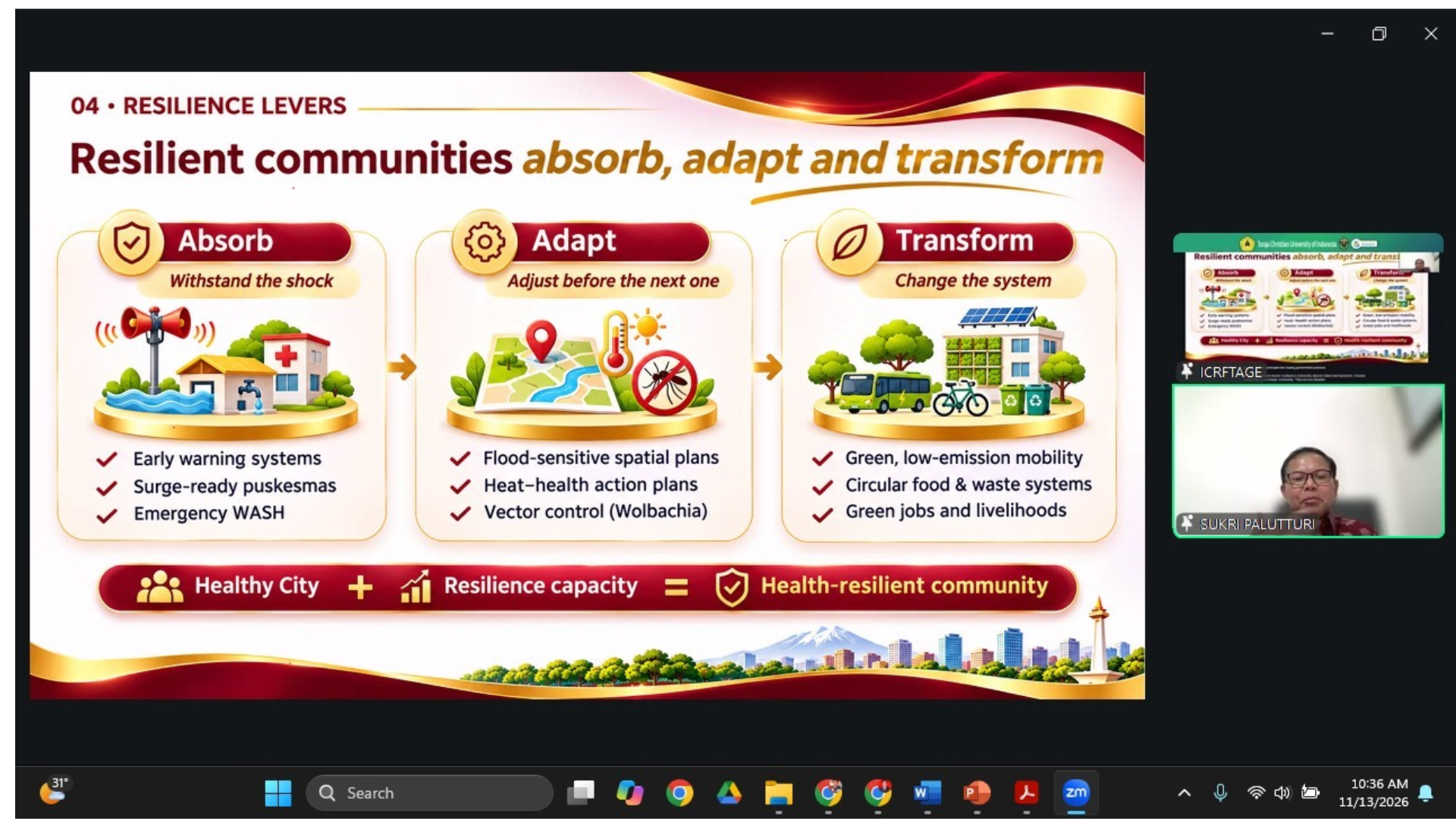
In his keynote session, titled “From Healthy Cities to Resilient Communities: Advancing Health in All Policies for a Sustainable Future,” Prof. Sukri emphasized that modern urban health challenges, including climate change, pollution, and food security, are structural issues that cannot be resolved solely by improving medical services. Therefore, the Health in All Policies (HiAP) approach is crucial to integrating health considerations into policies across all sectors.
“The health of a city is determined not only by the quality of its hospitals, but also by the condition of its roads, markets, rivers, residential environments, as well as government decisions on budgets and development policies,” emphasized Prof. Sukri, Dean of SPs UNHAS.
Furthermore, he discussed Indonesia’s preparedness for 2045, regarded as the nation's “Golden Year,” and the importance of shifting perspectives from Healthy Cities towards Resilient Communities. This concept is closely connected to the main pillars of ICRF-TAGE 2026, which position digital technology, sustainable agriculture, and the green economy as three strategic instruments for building resilient communities.
The participation of international speakers from Saudi Arabia, Kosovo, and Germany, alongside representatives from national universities, further underscores SPs UNHAS’s active role in expanding international academic cooperation and making a tangible contribution to inclusive and resilient sustainable development.