Antwerp University Researcher Explores the Evolution of Sulawesi’s Endemic Fish at SPs UNHAS International Guest Lecture
© SPs UNHAS Media 2026
© SPs UNHAS Media 2026
© SPs UNHAS Media 2026
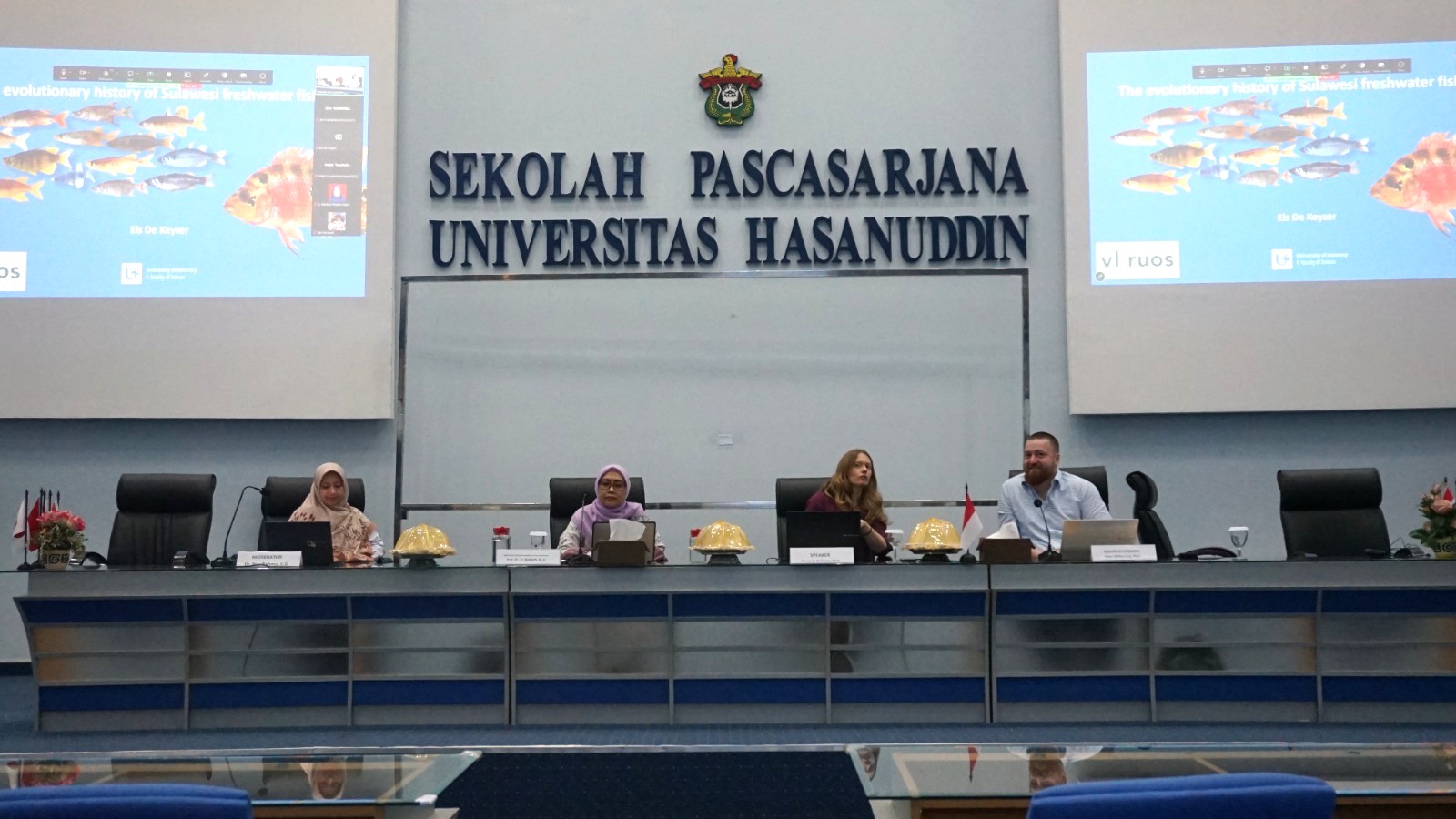
MAKASSAR, November 23 — The diversity of freshwater fish in Sulawesi’s lakes holds an important evolutionary story that can help explain how species emerge and how aquatic ecosystems are sustained. This was the central topic of an International Guest Lecture hosted by the Graduate School of Hasanuddin University (SPs UNHAS), titled "Ancient Lakes, New Invaders: The Evolutionary Story of Sulawesi’s Freshwater Fishes,” on Monday (23 November 2026).
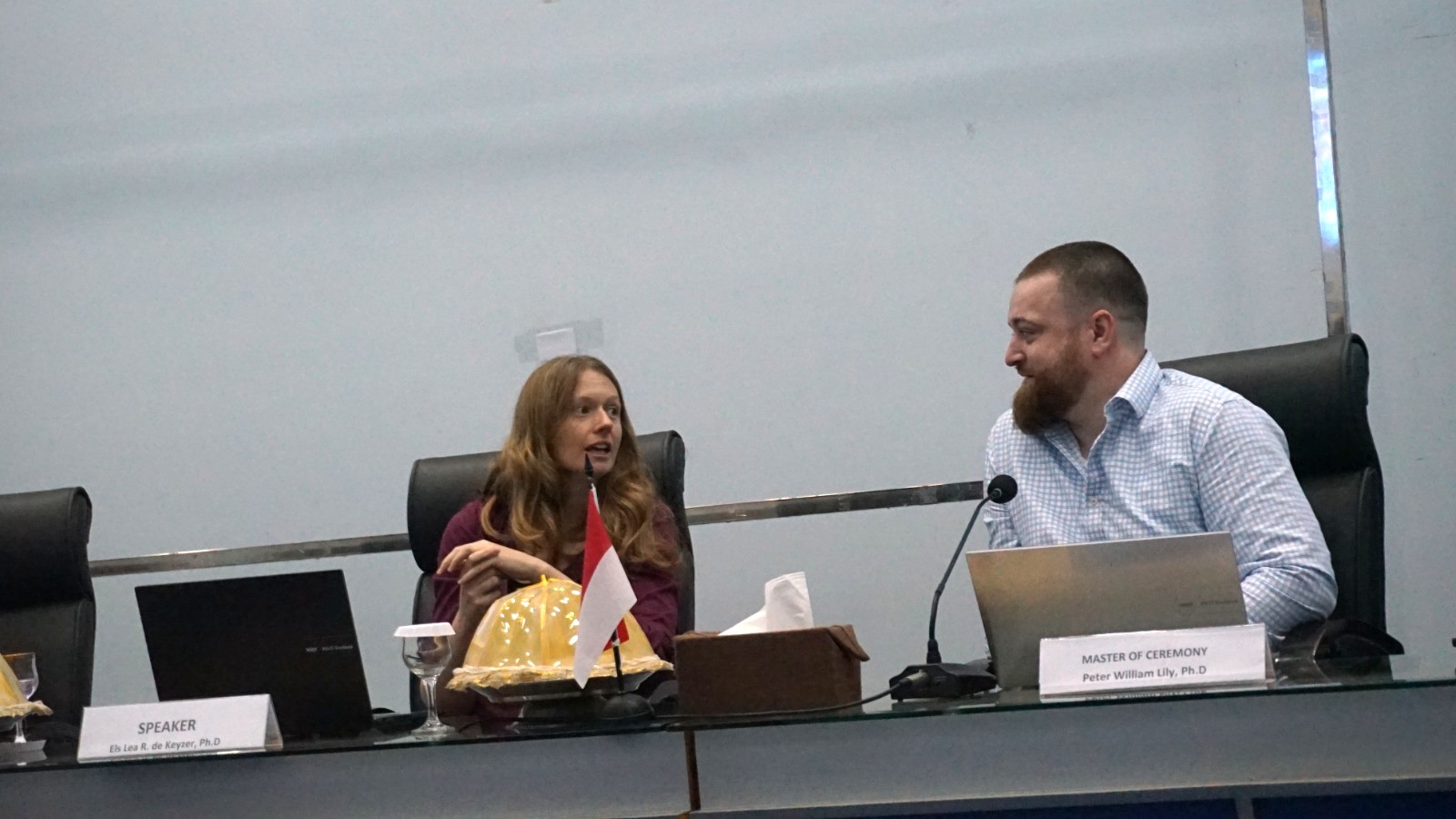
The international guest lecture featured Els Lea R. de Keyzer, Ph.D., an Evolutionary Genomics researcher from the University of Antwerp, Belgium. Her areas of expertise include population genomics, fish evolution, hybridization, adaptive radiation, metabarcoding, and RNA sequencing.
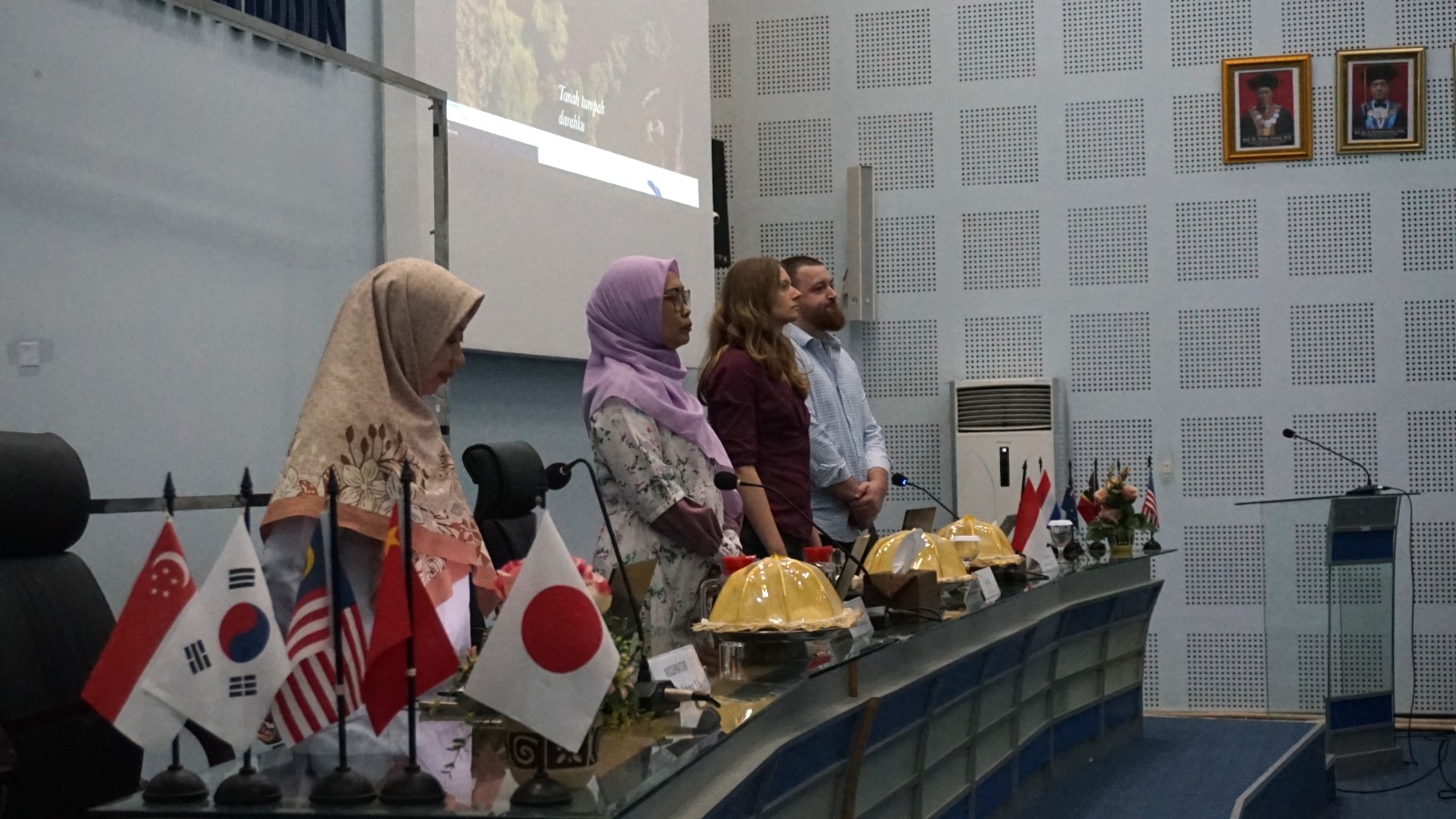
Representing the Dean of SPs UNHAS, Prof. Dr. Sukri Palutturi, S.K.M., M.Kes., M.Sc.PH., Ph.D., Vice Dean for Academic and Student Affairs Prof. Dr. Ir. Nadiarti, M.Sc., welcomed the speaker and expressed her appreciation for the opportunity to exchange knowledge through the international academic forum. She also noted that although Dr. Els had visited Makassar before, this was her first visit to the SPs UNHAS campus.
In her presentation, Dr. Els invited participants to understand biodiversity not simply in terms of the number of species found in an area, but also through the evolutionary processes that shape that diversity. She explained that understanding the origins and formation of species can help clarify the ecological conditions they need to survive.
“When we talk about biodiversity, if we want to understand it, we also need to understand how it was formed in the first place. Understanding how these species came into existence will help us understand what they need to survive,” she explained.
She highlighted that Sulawesi’s lakes, often referred to as "Wallace’s Dream Ponds", are home to exceptionally rich endemic biodiversity. This diversity is not limited to fish but also includes other groups of organisms, such as shrimp, snails, and crabs.
The discussion also highlighted the importance of protecting lake ecosystems. Dr. Els emphasized the need to prevent sedimentation and pollution, which can disrupt habitat balance and threaten the survival of endemic species. In her view, conservation efforts should be supported by biodiversity monitoring that provides ongoing information about ecosystem conditions.
“I think the most important thing is to keep your ecosystems as natural as possible. Why? Because native species have been living in these lakes for a long time and have adapted to specific niches. The more you change the environment, the more favorable it becomes for invasive species and the less favorable it becomes for your native species.” said Dr. Els.
In this context, she also discussed a research collaboration with Hasanuddin University to develop biodiversity monitoring methods using environmental DNA (eDNA). This approach uses genetic material found in environmental samples, such as water, to help detect the presence of organisms without always having to capture or directly observe them.
Through this forum, SPs UNHAS provided a platform for international knowledge exchange while broadening discussions on the research potential of Sulawesi’s aquatic biodiversity. Studies of evolution and genetic monitoring not only help explain the region’s rich species diversity but also provide a scientific foundation for protecting lake ecosystems and ensuring the long-term sustainability of their biodiversity.